Portsmouth to Caen Motorbike Ferry: The Complete 2026 Guide

The Portsmouth to Caen motorbike ferry is one of the best English Channel crossings for UK riders heading to Normandy. You leave Portsmouth, cross overnight or during the day, and roll off the gangway at Ouistreham into some of the finest touring country in northern France — the D-Day coast two minutes from the port gate, Bayeux 30km west, Suisse Normande an hour south. No motorway miles down through eastern France, no fighting the crowds at Dover, no tunnel. Just Portsmouth to Normandy in a single crossing. This guide covers everything for two-wheeled passengers on this route: verified 2026 prices, how to book, check-in at Portsmouth, how your bike is secured on the car deck, what to bring, onboard on Guillaume de Normandie and Mont Saint Michel, and riding in Normandy once you’re there.

Last updated: June 2026 | Prices and check-in times verified from official Brittany Ferries sources.
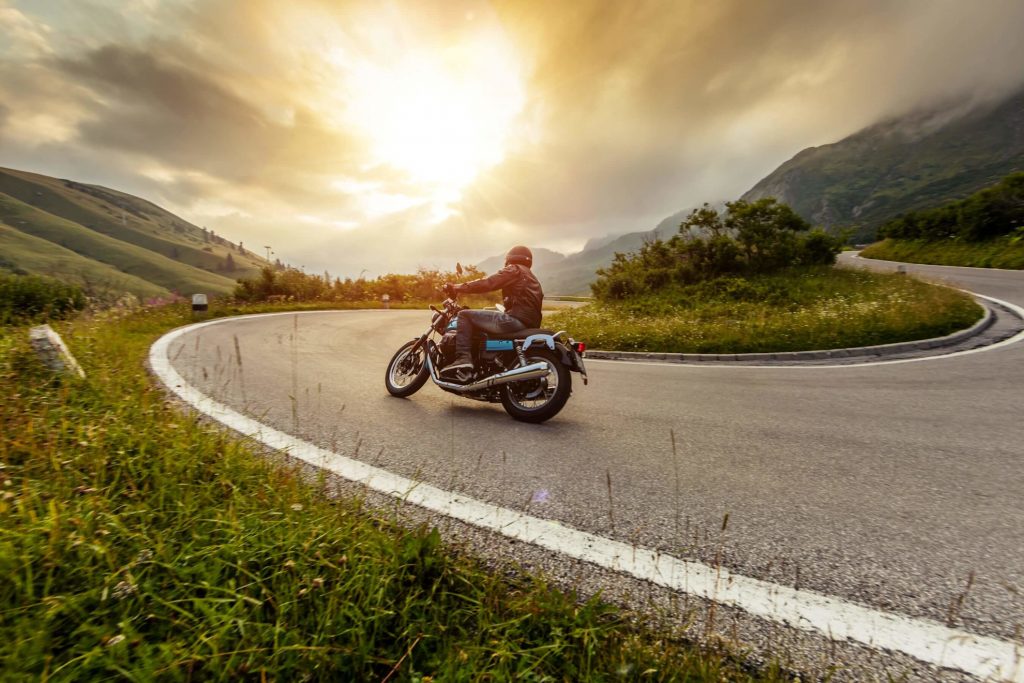
Portsmouth to Caen Motorbike ferry Guide

🏍️ Motorbike Ferry Fast Facts — Portsmouth to Caen

£58+
Solo rider + bike
45 min
Min check-in (check ticket)
~7 hrs
Crossing time
3/day
Sailings year-round
  • Motorbikes accepted on all sailings — Guillaume de Normandie and Mont Saint Michel, year-round
  • Crew secure your bike on the car deck with ratchet straps and foam pads — no tools needed
  • Three sailings daily — 08:00 and 15:00 day sailings, 23:00 overnight. All are approximately 7 hours
  • ⚠️ Overnight 23:00 sailing: cabin required — the booking system requires accommodation before checkout
  • ⚠️ Disable your alarm before leaving the car deck — the car deck is sealed and ship movement will trigger it
  • ⚠️ No pets with motorbike bookings — a separate vehicle booking with pet accommodation is required

Book Motorbike Crossing with Brittany Ferries

Why Portsmouth to Caen for Motorcyclists?

For riders from the south-east, Midlands, or east of England, Portsmouth is the natural departure port for France. The M27 and A27 bring you straight into the port with no city-centre navigation. You’re not grinding through Dover’s traffic, not queuing for a tunnel slot, not dealing with the A20 at 5am. Portsmouth International Port is straightforward — check in, board, and you’re done.

More importantly, look at where you arrive. Ouistreham puts you at the mouth of the Canal de Caen à la Mer, on the Normandy coast, with Sword Beach visible from the port exit and the D514 coast road heading west toward the D-Day beaches within minutes. This isn’t a transit port — it’s a destination in itself, and it’s the gateway to some of the most compelling riding country in northern France.

The Suisse Normande — river gorges and forested valleys south of Caen — is tight, engaging, technical riding. The Pays d’Auge east of Caen is classic rolling Norman countryside, quiet D-roads between cider orchards and half-timbered villages. The coast road west through Arromanches and on toward Cherbourg is spectacular on two wheels. And for those heading further — Brittany, the Loire, the Dordogne — you’re already well placed, significantly west of Dover.

Normandy motorbike touring has a justified reputation — the variety of riding within an hour of Ouistreham is hard to match anywhere in northern France. The crossing itself is one of the better value English Channel ferry options for motorcyclists. Three sailings daily, approximately seven hours, year-round. Solo rider with a bike from £58. Rider and pillion from £95. And you arrive with a full day of riding ahead — or rested after the overnight sailing and ready for the road.

Motorbike Ferry Prices 2026 — Portsmouth to Caen

All fares below are verified 2026 starting prices from the Brittany Ferries booking page. Motorbike fares cover the bike and the number of passengers stated. Fares are dynamic — they rise with demand, season, and proximity to departure. Peak summer sailings will be significantly higher than the prices shown here. Book early for the best prices and to secure a space — motorbike spaces sell out faster than car spaces on popular sailings.

Ticket Type From What’s Included
Solo rider + motorbike £58 1 passenger + 1 motorbike. Cabin or Couchette added separately for the overnight 23:00 sailing
Rider + pillion (two-up) + motorbike £95 2 passengers + 1 motorbike. Cabin or Couchette added separately for the overnight sailing
Motorbike + sidecar + 2 passengers £114 Covers a sidecar outfit and 2 passengers. Cabin added separately for overnight sailing
2 bikes + 2 passengers £117 Two motorbikes and 2 passengers travelling together. Each bike/rider can also be booked individually
+ Cabin (overnight 23:00 sailing) From £157+ Compulsory on the 23:00 overnight sailing. Must be selected before checkout. See Cabins Guide below for all grades and prices

Full Cabins Guide – All Grades & Prices →

🏍️ Which Sailing for Motorcyclists?

Overnight 23:00: Most popular for touring riders. Leave Portsmouth at 23:00, arrive Ouistreham at 06:45 or 07:30 French time — a full day of riding immediately ahead. A cabin is compulsory and must be selected before checkout.

Day sailings (08:00 and 15:00): No cabin required. Lounges, restaurants and outer decks available throughout. Useful for returning home or for riders who prefer a day crossing. The 08:00 arrives in Ouistreham around 15:00 French time; the 15:00 arrives around 22:00.

💡 Cabin vs Couchette Plus for Riders

For the overnight crossing, a Couchette Plus berth on Guillaume de Normandie is the budget option — a recliner-style berth in a shared space. For riders doing full touring days, a 2-berth inside cabin gives you a proper bunk, ensuite shower, and a useful night’s sleep before a day in the saddle.

Two riders sharing a 2-berth cabin split the cost between them — often surprisingly good value compared to what equivalent accommodation in Portsmouth would cost.

⚠️ No pets with motorbike bookings: Brittany Ferries does not permit pets to travel with motorcyclists. If you want to bring a dog or cat, you need a separate vehicle booking with a pet-friendly cabin or kennel. This applies regardless of the size of your motorbike or whether you have a sidecar. See our Pet Travel Guide for full details.

Check-In and Boarding at Portsmouth — Step by Step

1

Arrive — Check Your E-Ticket for the Exact Check-In Time

Brittany Ferries require motorbike passengers to check in at least 45 minutes before departure — always check your e-ticket as the time shown there is the one that applies to your specific sailing. For peak summer sailings, arriving 90 minutes before departure is strongly recommended. The port address is Portsmouth International Port, George Byng Way, PO2 8SP. Follow Brittany Ferries signs from the M275 — the terminal is well signposted from the motorway approach.

2

Check-In Booth — Documents Ready

Pull up to the check-in booth and have your booking reference and valid passport ready. Also carry your V5C registration document — French police can request it at a roadside stop to confirm ownership of the vehicle. If your insurer has provided a green card (no longer legally required but still useful evidence at a police stop or after an accident), keep it with your passport. Your face must be clearly visible — remove your visor or raise it for the check-in agent. You’ll be issued a boarding card, which also acts as your cabin key if you’ve booked a cabin. Your onboard Wi-Fi code is printed on the boarding card — keep it safe. The first digit of your cabin number is your deck number. Keep the boarding card away from your phone — it demagnetises easily.

3

UK Border Force — Remove Your Helmet

After check-in you’ll pass through UK Border Force passport control. Remove your helmet entirely for the Border Force officer — your full face must be visible. After passport control, proceed through security and into the holding area. Keep your helmet, gloves and full riding gear on in the holding lanes and on the loading ramp — surfaces can be wet and there is vehicle movement around you at all times.

4

Boarding — Ramp Care and Parking on the Car Deck

When directed to board, ride carefully — loading ramps at Portsmouth can be wet and greasy. Brake progressively, avoid sharp steering inputs, and follow crew guidance to your parking position. Motorbikes are typically loaded before cars, which means you’re settled on deck before the bulk of traffic arrives. Once positioned, a crew member will secure your bike.

Note your deck number and the nearest stairwell or lift exit before leaving the car deck — you’ll need these when you return on arrival at Ouistreham.

5

Before You Leave the Car Deck — Alarm and Luggage

Disable your motorcycle alarm completely before leaving the car deck. The car deck is sealed on all sailings once underway, and the ship’s movement will trigger any armed alarm. Nobody can reach it once sealed. A triggered alarm for a seven-hour crossing is a serious disruption and will drain your battery. If your bike has a transport mode or immobiliser setting, engage it. Check your owner’s manual at home well before your sailing if you are unsure — not on the day.

Take everything you need for the crossing now: overnight bag, documents, any medications, chargers, valuables. Lock your panniers — particularly soft panniers, which can be accessed if left unlocked. Hard locking luggage is the safest option on an overnight crossing. You cannot return to the car deck until arrival at Ouistreham. Do not start your engine until crew instruct you to. When you do return at Ouistreham, check your tyre pressures before you ride — tyre pressure can drop during a cold 7-hour crossing in a sealed hold, and a soft rear tyre on a wet loading ramp is not something you want to discover as you exit.

🚨 50kph+ over the limit = criminal offence from December 2025 — exceeding the speed limit by 50 kph or more became a criminal offence in France from December 2025. Maximum fine rises from €1,500 to €3,750, with possible imprisonment up to 3 months, licence suspension up to 3 years, and seizure of the bike. As a UK rider your licence cannot be permanently confiscated but you can be barred from riding in France.

How Your Bike is Secured on the Car Deck

For many riders taking a ferry for the first time, the car deck is the biggest unknown. Your bike crosses the English Channel in a sealed hold for around seven hours while the ship moves. Brittany Ferries has a crew-led securing process that is well-practised across all their vessels, and it is genuinely reliable.

🔧 Ratchet Straps and Foam Pads

A trained crew member secures your bike using heavy-duty ratchet straps fixed to deck anchor points, with thick foam pads placed between the strap and your seat or bodywork to prevent damage or marking. You do not need to supply your own straps — Brittany Ferries provide everything.

If you prefer to use your own ratchet straps, you can — but the crew will inspect the result. Never over-tighten: excess strap tension can crack a seat pan or damage bodywork. If you have a custom or premium seat, carrying a small piece of neoprene or folded cloth for additional pad protection adds peace of mind without adding luggage weight.

🏍️ Sidestand, First Gear and Chocks

Your bike is parked on the sidestand where possible — this creates a more stable base than the centrestand on a moving deck. Leave your bike in first gear before dismounting. Wheel chocks are used where appropriate for additional stability.

The car deck crew are experienced with all machine types — sports bikes, adventure tourers, cruisers, large tourers and sidecar combinations all cross regularly. Don’t worry about communicating what type of bike you have — they’ll know what to do.

🎒 Luggage and Panniers

Remove everything you need for the crossing before leaving the deck. Soft panniers are generally fine — the strap securing process won’t disturb them — but anything loose or poorly attached can shift on a rough crossing. Hard locking panniers are the most secure overnight option.

Lock your panniers before leaving the deck. Don’t leave valuables in unlocked luggage on an overnight crossing. Take your helmet if your panniers don’t lock — it can be left in the cabin or locker.

Onboard — Guillaume de Normandie and Mont Saint Michel

Once you’ve left the car deck and found your cabin or lounge space, both ships have everything you need for a comfortable seven-hour crossing. The passenger experience is broadly the same on both vessels.

🛏️ Cabins and Couchette Plus

Your cabin is assigned at booking — your boarding card is the key. All cabins include ensuite, air conditioning, bed linen and towels. Soap and shower gel provided. On overnight sailings, music plays through cabin speakers shortly before the hour as a wake-up, followed by an announcement approximately one hour before arrival. A second announcement at 30 minutes before docking instructs passengers to vacate cabins.

Guillaume de Normandie: UK 3-pin + EU 2-pin sockets, USB charging in cabins. Mont Saint Michel: Continental 2-pin only — bring a UK travel adaptor. Full Cabins Guide →

🍽️ Food and Drink

Guillaume de Normandie: Riva Bella brasserie (deck 7), Le Jardin restaurant (deck 8, plant-focused menu), Les Planches bar. Duty-free boutique opens shortly after departure.

Mont Saint Michel: Les Romantiques à la carte, La Galerie self-service, Le Café du Festival, Blue Note Bar. Payment in sterling and euros accepted on both ships. Head for dinner early after boarding on overnight sailings — the restaurants fill quickly after departure.

📶 Wi-Fi and Practical

Your Wi-Fi access code is printed on your boarding card. Public showers are available on both ships for passengers without a cabin on daytime crossings. Sleep packs (pillow, blanket, eye mask, earplugs) can be purchased from the Information Desk.

Remember the time zone: France is 1 hour ahead of the UK year-round. The 23:00 overnight sailing arrives at Ouistreham at 06:45 or 07:30 French local time — plan your morning and any onward arrangements in French time.

Riding in Normandy — Rules, Roads and Routes

Normandy is excellent motorcycle country — well-maintained roads, varied terrain, light traffic outside peak season, and a landscape that changes meaningfully every 30 minutes. The D-Day coast, the inland valleys, the bocage, the cider country — all are on excellent roads for two wheels. But several French rules catch UK riders out. Know these before you leave the car deck.

🏍️ French Motorcycle-Specific Rules — 2026

🦺 Hi-viz vest mandatory — one per rider, accessible from the bike (not in a locked top box). Must be put on before exiting the bike at any roadside stop. Fine up to €135. Carry one in a jacket pocket.

🧤 CE-certified gloves compulsory — since 2017, wearing CE-certified motorcycle gloves is a legal requirement in France for both rider and pillion. Fine: €68 flat rate, rising to up to €450. Your gloves must meet CE Level 1 or 2 certification — check before you travel.

💡 Headlights on at all times — daytime running lights or headlights must be on at all times. Most modern bikes do this automatically; check your settings before departure.

🚫 No earphones or earbuds — wearing any headphones while riding is illegal in France, including a single earbud. Intercom systems built into helmets are permitted. Fine: €135.

🍷 Drink-drive: 0.05% BAC — lower than England’s 0.08%. If riding off the overnight ferry after drinking on board, alcohol may still be present. Don’t ride until you’re clear.

📸 Radar detectors illegal — any device capable of detecting speed cameras is banned in France, including GPS speed camera alerts on sat navs. Disable all camera alert features before departure. Fine up to €1,500.

🔀 Lane filtering — permanently legal since 9 January 2025 — nationwide on motorways and dual carriageways with at least two lanes per direction when traffic is heavy. Maximum 50 kph in moving traffic, 30 kph in stationary traffic. Must signal before filtering and rejoin the lane when traffic flows freely. Fine: €135 for non-compliance.

⚔️ D-Day Coast — D514 West from Ouistreham

Sword Beach is two minutes from the port exit. The D514 coast road heads west from Ouistreham through Lion-sur-Mer, Luc-sur-Mer and Courseulles-sur-Mer (Juno Beach), continuing to Arromanches (Gold Beach) and beyond. This is not technically challenging riding — it’s the ideal first morning road for clearing your head and settling into driving on the right. The road is lined with memorials, cemeteries and beaches, and the emotional weight of the landscape is part of the ride.

🏔️ Suisse Normande — Best Roads in the Region

South of Caen, the Orne valley cuts through a landscape of forested gorges and river bends that earns its nickname. The route from Thury-Harcourt south through Clécy to the Pain de Sucre viewpoint is the stand-out ride — demanding, precise and genuinely satisfying — the kind of riding you remember. Quiet outside July and August. About an hour from Ouistreham.

🍎 Pays d’Auge — Classic Norman Roads

East of Caen, the rolling D-roads through Camembert country and the Route du Cidre are some of the most satisfying riding in Normandy — broad enough to carry pace, empty enough to make the most of it. Beuvron-en-Auge and Cambremer are both good stops for a break. The D16 and D101 around Lisieux are particularly good.

🏰 Falaise and South Normandy

William the Conqueror’s birthplace, 35km south of Caen on the D562, sits above a river gorge with a spectacular castle. The roads south of Falaise toward Domfront and the Mortain area are largely empty — rolling bocage on narrow D-roads, ideal for a longer day out on a tourer. Push south toward Mont Saint-Michel via Avranches if you’re making a longer trip of it.

💡 First miles tip: The moments most likely to catch you out aren’t the long straights — they’re when you pull away from a petrol station, out of a car park, or onto a quiet lane and your instincts default to the left. Say “stay right” out loud at junctions for the first ten miles. It sounds excessive until it stops a collision on a narrow Norman lane. For the full guide to French road rules, speed limits, toll roads and Crit’Air, see our Driving in France from Caen guide → Also confirm before you travel that your breakdown cover extends to France — many UK policies don’t automatically. For a solo rider in rural Normandy, European breakdown cover is considerably more than a nice-to-have.

🏍️ Riding in France from Caen

Speed limits for motorcycles, the gloves law, French road rules, priorité à droite, Normandy route planner and what to do at a breakdown — all in the dedicated guide for riders arriving at Ouistreham.

Riding in France from Caen →

Frequently Asked Questions — Portsmouth to Caen Motorbike Ferry

Can I take a motorbike on the Portsmouth to Caen ferry?

Yes. Brittany Ferries accepts motorbikes on all Portsmouth to Caen sailings, on both Guillaume de Normandie and Mont Saint Michel, year-round. Fares start from £58 for a solo rider and bike. All three daily sailings — 08:00, 15:00 and 23:00 — carry motorbikes. The overnight 23:00 sailing requires a cabin or Couchette Plus, which must be selected before checkout. Day sailings require no accommodation.

How much does it cost to take a motorbike on the Portsmouth to Caen ferry?

From £58 for a solo rider with a motorbike (2026 verified starting price). A rider with a pillion passenger (two-up) starts from £95. A motorbike with sidecar and two passengers from £114. Two bikes with two passengers from £117. These are dynamic fares — they rise with demand, season, and proximity to departure. Book early for the best prices. On the overnight sailing, add a cabin or Couchette Plus on top of the motorbike fare.

How is my motorbike secured on the car deck?

Brittany Ferries crew secure your bike using heavy-duty ratchet straps fixed to deck anchor points, with foam pads between the strap and your seat to prevent damage. You do not need to supply your own straps or do anything yourself — the crew handle it. Leave your bike on the sidestand, in first gear. You may use your own ratchet straps if you prefer, and the crew will inspect them. Do not leave your alarm armed — disable it completely before leaving the car deck.

What check-in time do I need at Portsmouth with a motorbike?

Brittany Ferries require motorbike passengers to check in at least 45 minutes before departure — always check your e-ticket as the time shown there applies to your specific sailing. For peak summer sailings, arriving 90 minutes before departure is strongly recommended to allow time for check-in, passport control, and settling in the holding area comfortably.

Can I get Priority Disembarkation on a motorbike?

No. Priority Disembarkation is not available to motorcyclists. The service is also not available to passengers travelling with pets, requiring special assistance, or with reduced mobility. Motorbikes are specifically excluded from Priority Disembarkation under Brittany Ferries’ terms and conditions.

Do I have to wear gloves when riding my motorbike in France?

Yes. CE-certified motorcycle gloves have been a legal requirement in France since 2017 for both rider and pillion. Your gloves must meet CE Level 1 or Level 2 certification. This is one of the few rules specific to motorcyclists in France. Fine: €68 flat rate, rising to up to €450. Check that your gloves carry CE certification before you travel.

Can I take a pet with me on a motorbike booking?

No. Pets cannot travel with motorcyclists on Brittany Ferries. If you want to bring a dog or cat, you need a separate vehicle booking with a pet-friendly cabin or kennel. This applies regardless of bike type or whether you have a sidecar. See our Pet Travel Guide for full details.

Can I take a sidecar on the Portsmouth to Caen ferry?

Yes. Sidecar outfits are accepted. Book under the Motorbike + Sidecar + 2 Passengers option, which starts from £114. For unusual combinations or if you are unsure which category applies, contact Brittany Ferries directly on 0330 159 7000 before booking online.

What are the best roads for motorcycling in Normandy from Caen?

The D514 coast road west from Ouistreham through the D-Day beaches is the ideal first ride — manageable, scenic and historically significant. The Suisse Normande south of Caen (particularly the D562 through Thury-Harcourt to Clécy) is the most technically rewarding riding in the region. The Pays d’Auge east of Caen offers quieter D-roads through cider country. Falaise and the bocage country south of Caen are excellent for longer day rides. See our full Driving in France from Caen guide for road rules, speed limits and toll information.

Continue Planning Your Portsmouth to Caen Trip

🗺️

Driving in France from Caen

Full guide to French road rules, speed limits, toll roads, Crit’Air and Normandy routes

Driving Guide →

🚗

Car Ferry Guide

Prices, check-in times, alarm advice and the full guide for vehicle passengers

Car Ferry Guide →

🛏️

Cabins Guide

Every cabin grade on both ships with verified prices — get a good night’s sleep before a day in the saddle

Cabins Guide →

🏍️

Riding in France from Caen

Gloves law, speed limits, priorité à droite, Normandy route planner — the full guide for riders

Riding in France →

Ready to Book Your Portsmouth to Caen Motorbike Crossing?

Motorbike spaces on popular summer sailings sell out well in advance. Book early to secure your crossing and get the best fare.

Book Motorbike Crossing with Brittany Ferries