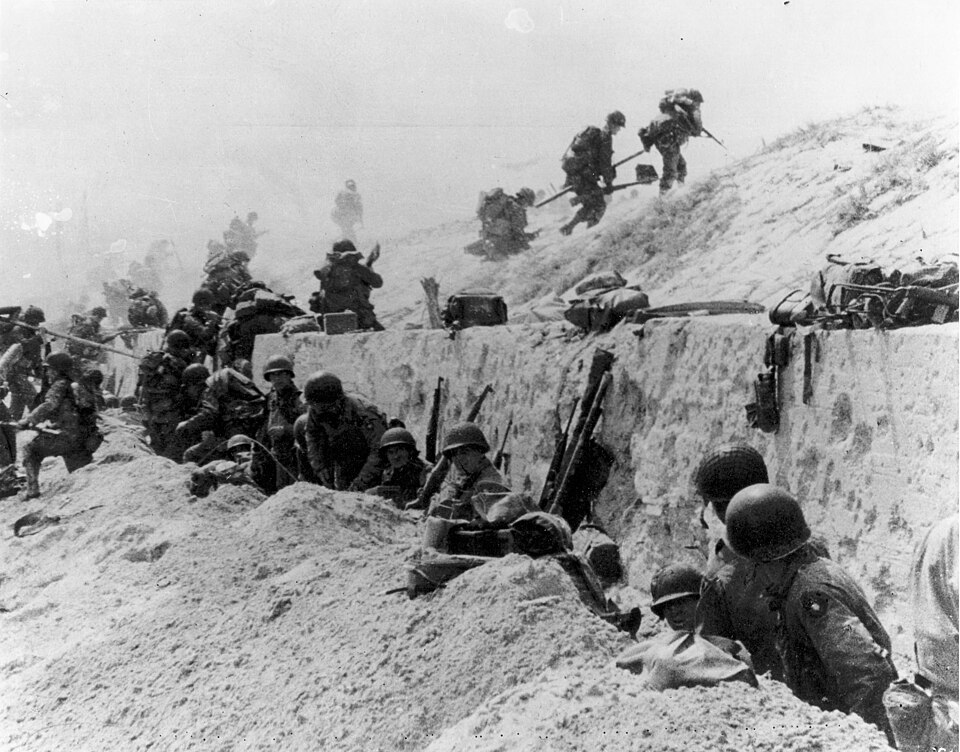
Utah Beach is the westernmost of the five D-Day landing beaches, and the only one on the Cotentin Peninsula in the Manche department rather than Calvados. On 6 June 1944, the US 4th Infantry Division came ashore here as part of the wider Normandy landings, supported by paratroopers of the 82nd and 101st Airborne Divisions who had dropped inland hours before dawn. Utah Beach Normandy is around 88km from Caen and roughly 98km from the Portsmouth to Caen ferry terminal at Ouistreham — further than the other four beaches, but well worth the drive for its museum, memorials and remarkably unspoiled coastline.
Utah Beach D-Day is, in many ways, the flip side of the Omaha Beach story. Where Omaha became a byword for slaughter, the landing at Utah was the least costly of any Allied beach on 6 June 1944 — a combination of strong currents pushing the first wave onto a less-defended stretch of sand, decisive leadership on the ground, and the extraordinary success of the airborne assault inland. It was also, technically, a late addition to the invasion plan, added specifically to secure the deep-water port of Cherbourg further up the peninsula.
This complete guide to Utah Beach France covers everything you need to plan your 2026 visit: the full story of the D-Day landings at Utah Beach, which regiments and airborne divisions were involved, the casualty figures and how they compare to the other beaches, and a thorough guide to every significant site to visit today — from the Utah Beach Landing Museum to the Higgins Boat Monument, the Utah Beach American Memorial and the Richard Winters Leadership Monument.
Last updated: July 2026 | Utah Beach facts verified from the American Battle Monuments Commission, the National Archives, Britannica, the US Army’s official history and primary sources. Admission prices verified from official museum sources.