Portsmouth City Guide 2026: The Complete Visitor’s Guide

Portsmouth is unlike any other city in Britain — and this Portsmouth city guide covers everything worth doing here, from the Historic Dockyard to Southsea Beach, Gunwharf Quays to Old Portsmouth. The Great Waterfront City sits on Portsea Island, making it the UK’s only island city, surrounded on three sides by the sea and separated from the mainland by two narrow creeks. Its identity is written entirely in saltwater: three world-famous warships, 500 years of Royal Navy history, a horizon permanently occupied by warships, ferries, and the faint outline of the Isle of Wight. Sir Francis Drake’s flagship was built here. Lord Nelson died aboard HMS Victory which is now drydocked here. Henry VIII watched the Mary Rose sink from the battlements of Southsea Castle in 1545. And Charles Dickens was born in a small terraced house in Landport in 1812.

Whether you’re arriving on the Caen ferry and spending a day before heading north, or making Portsmouth the centrepiece of a longer visit, this guide covers everything worth doing with your time. Portsmouth Historic Dockyard is one of the greatest maritime museums on earth: three warships — HMS Victory (1765), HMS Warrior (1860) and the Mary Rose (1509) — spanning three and a half centuries of British naval supremacy, all within walking distance of one another. The Spinnaker Tower at Gunwharf Quays stands 170 metres above Portsmouth Harbour, offering views across the Solent to the Isle of Wight. The D-Day Story is the UK’s only museum dedicated to the events of June 1944 — and Portsmouth is the closest British city to Normandy, making this the most natural place in England to explore D-Day history. And 2026 is Portsmouth’s centenary year: the city was granted city status on 23 April 1926, and Portsmouth100 brings a year of events to Southsea Common, the harbour, and beyond.

This complete Portsmouth city guide covers the Historic Dockyard and its three warships, Gunwharf Quays and the Spinnaker Tower, Old Portsmouth and The Point, Southsea Beach and Common, the D-Day Story, Charles Dickens’ Birthplace, Fort Nelson, Hotwalls Studios, the Isle of Wight hovercraft, Portchester Castle, and practical information on getting here, parking, getting around, where to eat, and the best time to visit before catching the ferry to Caen.

Last updated: June 2026 | All admission prices and opening times verified

Portsmouth City Guide

Portsmouth: The Great Waterfront City

Portsmouth Historic Dockyard & Three Warships | Gunwharf Quays & Spinnaker Tower | D-Day Story | Southsea Beach | Old Portsmouth & The Point | Isle of Wight Hovercraft

⚓ Portsmouth at a Glance

UK’s only
Island City
3
World-Famous
Warships
170m
Spinnaker Tower
Views
1–3 Days
Ideal
Visit Length
  • Portsmouth Historic Dockyard — HMS Victory (1765), HMS Warrior (1860), the Mary Rose Museum, Action Stations and Harbour Tour all on one extraordinary site. 12-month all-inclusive ticket from £51 adult / £36 child (3–15) / from £99 family
  • Gunwharf Quays & Spinnaker Tower — 90+ outlet stores up to 60% off RRP, 30 waterfront restaurants and bars, and the 170m Spinnaker Tower with panoramic Solent views — from £18
  • The D-Day Story — The UK’s only museum dedicated to D-Day and the Battle of Normandy, with 10,000+ artefacts and a Normandy Landing Craft Tank to board — from £15.95 adult / £9.95 child (5–15)
  • Southsea Beach, Castle & Common — over a mile of seafront, Southsea Castle (FREE, April–October), Blue Reef Aquarium, and the D-Day Story all within walking distance of one another — FREE to explore
  • Old Portsmouth & The Point — cobbled streets, ancient pubs, the 15th-century Round Tower, Royal Garrison Church, Camber Dock, and some of the most atmospheric corners of any English city — FREE to explore
  • Charles Dickens’ Birthplace Museum — the Georgian terraced house in Landport where Britain’s greatest novelist was born in February 1812, now a period museum — from £6.60
  • Fort Nelson & Royal Armouries — a magnificent Victorian hilltop fortress on Portsdown Hill housing the national artillery collection, with panoramic views across Portsmouth and the Solent — FREE (Tue–Sun)
  • Isle of Wight by Hovercraft — Ryde in 10 minutes from Southsea on the world’s only commercial passenger hovercraft service. Year-round. See hovertravel.co.uk
  • Portchester Castle — one of the best-preserved Roman shore forts in Northern Europe, with a Norman keep inside its walls, right on the shore of Portsmouth Harbour
  • Portsmouth100 Centenary Events 2026 — SailGP on the Solent (25–26 July), Victorious Festival on Southsea Common (28–30 August), Pride of Portsmouth Lion Trail (July–September), Clipper Race Grand Finale at Gunwharf Quays (25–26 July)

Why Visit Portsmouth?

Portsmouth divides opinion among people who haven’t been — and converts almost everyone who has. Here is why Britain’s only island city deserves a proper visit rather than a drive-through.

⚓ Three Warships — Three Centuries of British Naval History

No other place in the world has anything like Portsmouth Historic Dockyard. The Mary Rose was Henry VIII’s favourite warship, sunk in the Solent in 1545 and raised in 1982 — her timber hull preserved in extraordinary detail. HMS Victory is Nelson’s flagship, still in commission, the oldest naval vessel in the world still on the active list. HMS Warrior was the most powerful warship ever built when she launched in 1860 — iron-hulled, armour-plated, steam-and-sail. Three ships. Three eras. One site. The 12-month all-inclusive ticket from £51 is exceptional value for what may be the finest maritime museum on earth.

🌊 The Solent — A Waterfront City Like No Other

Portsmouth is surrounded by water on three sides, and the sea is omnipresent in a way that even other coastal cities rarely match. From the Spinnaker Tower’s glass floor, from the ramparts of Old Portsmouth, from Southsea Common at sunset — the Solent is always there, with the Isle of Wight as a constant backdrop and warships, ferries, and yachts making the harbour perpetually active. A 10-minute hovercraft ride from Southsea takes you to Ryde and the Isle of Wight; a harbour boat tour brings you close to HMS Queen Elizabeth or HMS Prince of Wales if either carrier is in port. Portsmouth earns its title as the Great Waterfront City.

🎖️ D-Day’s Closest British City — Normandy Starts Here

The largest seaborne invasion in history departed from Portsmouth and its surrounding harbours on the night of 5–6 June 1944. The D-Day Story is the UK’s only museum dedicated exclusively to these events — and the Brittany Ferries route to Caen (Ouistreham) brings you directly to the coast where those landings happened, just 2km from the port gate to Sword Beach. No other city in Britain tells this story with the same directness: Portsmouth sent the fleet, Ouistreham received it. The connection between these two port cities is unique in D-Day history, and the D-Day Beaches — Sword, Juno, Gold, Omaha — are all within 45 minutes of Caen.

🎉 Portsmouth100 — Britain’s Centenary City in 2026

Portsmouth was granted city status on 23 April 1926 — making 2026 its centenary year, and the city is marking it in style. HMS Victory is undergoing live restoration in its dry dock (accessible throughout — a unique chance to watch 18th-century conservation work). The Pride of Portsmouth Lion Trail puts 30+ decorated lion sculptures across the city from July to September. The Emirates Great Britain SailGP brings the Solent alive on 25–26 July. The Clipper Race Grand Finale arrives at Gunwharf Quays on 25–26 July. And Victorious Festival — headlined by The Black Keys, Kasabian, and Richard Ashcroft — fills Southsea Common on 28–30 August. 2026 is a particularly good year to visit Portsmouth. See visitportsmouth.co.uk/portsmouth-100 for the full programme.

Top Things to Do in Portsmouth

Portsmouth’s main attractions cluster around three distinct areas: the Historic Dockyard and Gunwharf Quays at the northern end of Portsea Island, Old Portsmouth and The Point to the south-west, and Southsea to the south-east. Here is everything worth seeing, with verified 2026 admission prices.

Portsmouth Historic Dockyard

From £51 adult | £36 child (3–15) | From £99 family — 12-month all-inclusive ticket | Address: Victory Gate, HM Naval Base, Portsmouth PO1 3LJ | Open: Daily | Duration: 3–6 hours minimum

Portsmouth Historic Dockyard is the centrepiece of any visit to the city — and a serious contender for the finest maritime museum in the world. The all-inclusive 12-month ticket covers every attraction on the site: HMS Victory, the Mary Rose Museum, HMS Warrior, Action Stations, the National Museum of the Royal Navy, and the 45-minute Harbour Boat Tour that circumnavigates the working naval base. The dockyard has been in continuous operation for over 500 years; the oldest surviving buildings date to the 1700s.

HMS Victory (launched 1765) is Nelson’s flagship at Trafalgar, still in commission with the Royal Navy, the world’s oldest warship on the active list. You can walk the gun decks, see the spot where Nelson was shot by a French marksman on 21 October 1805, and visit the cabin where he died below decks. In 2026 she is undergoing the most significant conservation work in her history — the Victory Live scaffolding allows unique close-up views of this extraordinary restoration. The Mary Rose Museum houses the salvaged hull of Henry VIII’s warship, raised from the Solent in 1982 after 437 years on the seabed, along with 19,000 artefacts recovered with her. HMS Warrior (1860) was the most powerful and fastest warship in the world when she launched — iron hull, armour plating, and both steam and sail.

💡 Ferry tip: If you’re sailing to Caen in the evening, the Dockyard is the ideal place to spend your day. The 12-month ticket means the admission is excellent value even if you only use it once — and the site is a 10-minute walk from the ferry terminal at Portsmouth International Port. Book online at historicdockyard.co.uk for the best price.

Gunwharf Quays & Spinnaker Tower

Gunwharf Quays: FREE to enter | Spinnaker Tower: from £18 adult | Address: Gunwharf Quays, Portsmouth PO1 3TZ | Open: Daily

Gunwharf Quays is Portsmouth’s waterfront centrepiece: a 35-acre site of former naval armaments storage converted into 90+ outlet stores offering up to 60% off RRP, with 30 bars and restaurants lining the harbour edge. On a fine day the waterfront terraces of Gunwharf — with ferries and warships moving through the harbour in front of you — are among the finest outdoor dining settings in southern England. The evening ambience, as the sun drops behind the Dockyard cranes and the Spinnaker Tower glows above the harbour, is genuinely memorable.

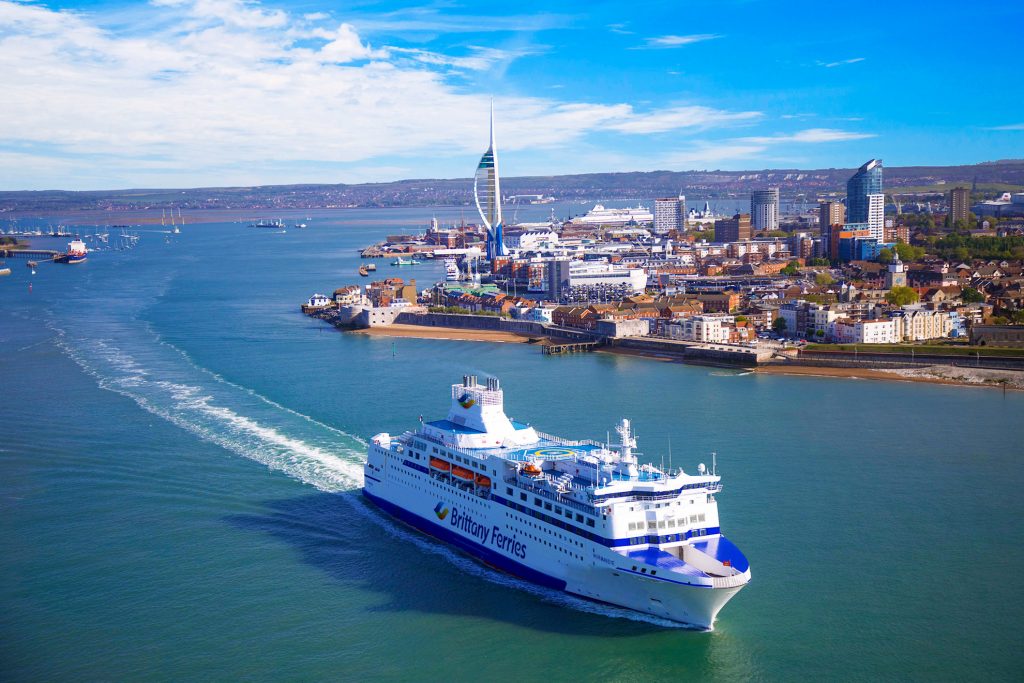
The Spinnaker Tower — modelled on a billowing sail and standing 170 metres above the harbour — is Portsmouth’s most recognisable modern landmark. Three observation decks offer views across the Solent to the Isle of Wight, along the Hampshire coast, and on a clear day as far as the South Downs and beyond. Deck One (100m) has a glass floor panel above the harbour for those with a head for heights; Deck Three (170m) is the highest public viewing platform on the south coast of England. From the tower you can trace the route the ferries take out of the harbour and across the Solent. Book online at spinnakertower.com. The Aspex Gallery at Gunwharf Quays is a contemporary arts venue housed in the Grade I listed Vulcan Building — free admission, changing exhibitions year-round.

Old Portsmouth & The Point

FREE to explore | Location: Old Portsmouth, PO1 2JH | 15 minutes’ walk from Gunwharf Quays

Old Portsmouth is the most atmospheric quarter of the city — a compact tangle of cobbled lanes, medieval fortifications, traditional pubs, and sea views through the harbour entrance. The Point, at the very tip of Portsea Island, is where the harbour narrows and every ferry, warship, and submarine passes through within metres of the old stone ramparts. The Round Tower (15th century) and Square Tower (16th century) are the surviving remnants of Portsmouth’s medieval defences, and the view from the ramparts looking out across the harbour entrance is one of the best in the city — free, and open year-round.

The Royal Garrison Church — bombed during the Second World War and now standing as a roofless but evocative shell — is a striking reminder of the Blitz’s impact on Portsmouth. The nave is open to the sky; the chancel was restored and remains in use. The Camber Dock, just inland from The Point, is Portsmouth’s oldest working harbour, still used by local fishing boats, and one of the quietest corners of the city on a weekday morning. The pubs of Old Portsmouth — the Still & West, the Spice Island Inn, the Bridge Tavern — are among the most historically atmospheric drinking venues in the South of England, with views over the harbour entrance that make watching ships pass an unmissable activity.

Southsea Beach, Castle & Common

Beach and Common: FREE | Southsea Castle: FREE (April–October only) | Location: Southsea Seafront, PO4 9RX

Southsea is Portsmouth’s seaside suburb, stretching along more than a mile of English Channel seafront from the harbour mouth east to Eastney. Southsea Common — a vast area of open grassland between the seafront and the Victorian terraces of Southsea — is the site of the annual Victorious Festival and the Great South Run, and the best place in the city to watch the SailGP racing on the Solent in July. The beach at Southsea is shingle, with firm sand at low tide — clean, well managed, and served by a seafront promenade that connects all the main attractions without needing a car.

Southsea Castle was built by Henry VIII in 1544 to defend the harbour entrance from French attack — and it was from these very battlements that Henry reportedly watched the Mary Rose sink in 1545. The castle is open free of charge from April to October, with heritage interpretation and views across the Solent. The D-Day Story museum sits on the seafront directly adjacent to Southsea Castle. The Blue Reef Aquarium is a short walk east along the seafront — an excellent family attraction at £13 with an underwater tunnel and 1,500+ marine species. Check current details at bluereefaquarium.co.uk.

The D-Day Story

£15.95 adult | £9.95 child (5–15) | Family £47.85 | Address: Clarence Esplanade, Southsea, PO5 3NT | Open: Daily

The D-Day Story is the UK’s only museum dedicated entirely to the events of 6 June 1944 and the subsequent Battle of Normandy — and Portsmouth is the right place for it. The largest seaborne invasion in history was planned and launched from Portsmouth and the surrounding harbours; thousands of soldiers, sailors, and airmen passed through this city on their way to the Normandy beaches. The museum holds over 10,000 artefacts and tells the story through first-hand accounts, interactive displays, and the Overlord Embroidery — a 272-foot tapestry commissioned in the 1960s as a modern-day companion to the Bayeux Tapestry, depicting the entire story of the D-Day operation.

The centrepiece of the museum is an original Higgins LCVP (Landing Craft, Vehicle, Personnel) — a Normandy Landing Craft Tank that visitors can board and walk through, exactly as the troops who stormed the beaches did. The connection to our Caen ferry route is direct: the Brittany Ferries service arrives at Ouistreham, just 2km from Sword Beach, and the D-Day Beaches are all within 45 minutes of the port. If you’re using Portsmouth as a stepping-stone to Normandy, the D-Day Story is the perfect introduction to what you’re going to see.

Charles Dickens’ Birthplace Museum

From £6.60 | Open selected dates — check before visiting | Address: 393 Old Commercial Road, Portsmouth PO1 4QL

Charles John Huffam Dickens was born in this modest Georgian terraced house in Landport on 7 February 1812. His family moved away when he was two, but Portsmouth retained its connection to Britain’s most beloved novelist throughout his life — he set scenes of Nicholas Nickleby here and returned several times. The birthplace museum recreates the rooms as they would have appeared in the early 19th century, with a collection of Dickens portraits, first editions, and personal items. It is a small and intimate museum, best visited as part of a day that also includes Portsmouth Cathedral (a short walk away) and the city centre. Dickens’ connection to Portsmouth is one of the less-told stories of a city that tends to focus on its naval history — and all the more interesting for that.

🏰 Fort Nelson — Royal Armouries

FREE (Tue–Sun) | Located on Portsdown Hill above Portsmouth, Fort Nelson is a brilliantly preserved Victorian fortress that was built in the 1860s to defend Portsmouth from French attack — the second time in its history the city had to prepare for that particular threat. It now houses the Royal Armouries’ national collection of artillery and historic cannon: over 350 guns, mortars, and field pieces spanning five centuries. The underground tunnels and magazines are as fascinating as the guns themselves. The views from the hilltop ramparts across Portsmouth, the Solent, and the Isle of Wight on a clear day are outstanding. Allow 2–3 hours. Note: Fort Nelson requires a drive or taxi from the city centre — it is not walkable from the main attractions.

🐠 Blue Reef Aquarium, Southsea

From £13 | Southsea’s seafront aquarium is a well-regarded attraction for families — 1,500+ marine species in habitats that range from the local Solent environment through to tropical coral reefs and sharks. The underwater tunnel is the highlight, offering a 360-degree walk-through surrounded by marine life. Feeding sessions run daily. Located directly on the Southsea seafront alongside the D-Day Story. For current prices, check bluereefaquarium.co.uk.

⛪ Portsmouth Cathedral

FREE | Portsmouth Cathedral traces its origins to a chapel founded in 1185, which grew gradually over the centuries and was finally elevated to cathedral status when the Diocese of Portsmouth was created in 1927. It sits in the heart of Old Portsmouth, within easy walking distance of the Historic Dockyard, Gunwharf Quays, and The Point. The cathedral contains a memorial to the crew of the Mary Rose and a window commemorating the D-Day landings. It is a working cathedral with regular services, and visitors are welcome throughout the day.

🎨 Hotwalls Studios & Aspex Gallery

FREE to enter | Portsmouth’s creative quarter occupies the Grade I listed Point Battery and Barracks on the seafront at Old Portsmouth. Hotwalls Studios opened in 2016 and provides working studio space to 13 independent artists and makers, with regular open events and workshops for visitors. The Aspex Gallery at Gunwharf Quays is the city’s leading contemporary arts venue — free admission, changing exhibitions, and a good café. Between the two venues, Portsmouth has a genuinely interesting contemporary arts scene that most visitors overlook in favour of the history.

⚽ Fratton Park — Portsmouth FC

Fratton Park has been home to Portsmouth Football Club since 1898. Pompey’s supporters are renowned for their passion — the matchday atmosphere is one of the most distinctive in English football, and the famous Pompey chime has been sung on this ground for over a century. Portsmouth were in the EFL Championship in 2024–25 season following their League One title. Whether or not you follow football, a Pompey home match is a genuine piece of Portsmouth culture. See portsmouthfc.co.uk for fixtures and tickets.

⛵ Portsmouth Harbour Boat Tour

The 45-minute Harbour Boat Tour is included in the Portsmouth Historic Dockyard ticket and departs from the Dockyard jetty. The route circumnavigates the working naval base, passing HMS Victory’s dry dock, the 18th-century ropery, and the vast sheds of the modern Royal Navy — including, when present, the aircraft carriers HMS Queen Elizabeth or HMS Prince of Wales. The tour’s commentary covers 1,200 years of Portsmouth’s naval history. This is one of the best ways to understand both the scale of the dockyard and why Portsmouth has been the heart of British sea power for so long.

🚴 Andrew Simpson Watersports Centre

Located at Tipner Lake on the north-east tip of Portsea Island, the Andrew Simpson Watersports Centre (named after the Olympic gold medallist who grew up in Portsmouth) offers sailing, kayaking, windsurfing, and stand-up paddleboarding for all abilities. Portsmouth Harbour and the adjacent Langstone Harbour are exceptional sailing waters, and the centre is a popular first choice for watersports beginners and experienced sailors alike. A genuinely unusual alternative to the Dockyard for those who want to get on the water rather than look at ships.

🌿 Victoria Park

FREE | Portsmouth’s oldest and largest public park, established in 1878, offers a peaceful retreat in the heart of the city. Victoria Park’s 15 acres include a bandstand, a large pond with waterfowl, flowerbeds, mature trees, and an aviary with peacocks. The war memorials in the park commemorate Portsmouth’s servicemen from multiple conflicts, and the park sits within easy walking distance of the railway stations and the city centre. It is the best green space in Portsmouth for a quiet lunch or a walk between attractions.
Sample Portsmouth Itineraries

Whether you have a morning before your evening sailing or a full day to explore, Portsmouth rewards some planning. These itineraries are designed for people using the Caen ferry — the port is close to every attraction.

Afternoon Before the Evening Ferry: Gunwharf Quays & Old Portsmouth

If you’re checking in for the evening sailing to Caen, the ferry terminal at Portsmouth International Port is less than a mile from Gunwharf Quays and a 15-minute walk from Old Portsmouth. Head straight to Gunwharf Quays for lunch at one of the waterfront restaurants — the harbour views are excellent. Walk south to Old Portsmouth along the seafront wall: the Round Tower, the Square Tower, the harbour entrance at The Point, a pint at the Still & West watching the traffic through the narrows. Arrive back at the port via the ferry terminal road. Allow 3–4 hours for a relaxed version. The Spinnaker Tower (if not yet visited) is a 10-minute walk from the terminal — go up before check-in if time allows.

One Full Day: The Essential Portsmouth

Morning: Arrive at the Historic Dockyard when it opens. Prioritise the Mary Rose Museum (allow 90 minutes minimum — it is extraordinary), then HMS Victory (the guided tour runs approximately 45 minutes). Have the included Harbour Boat Tour as a mid-morning break. The 12-month ticket allows you to spread the remaining ships and museums across future visits.

Afternoon: Walk 10 minutes south to Gunwharf Quays for lunch on the waterfront. Ascend the Spinnaker Tower (buy tickets in advance online for the best price). Explore the outlet stores or the Aspex Gallery. Walk south-west to Old Portsmouth for 30 minutes — The Point and the harbour entrance reward even a short visit.

Evening: Return to Gunwharf Quays or Old Portsmouth for dinner — the waterfront restaurants at Gunwharf or the traditional pubs of The Point are both excellent choices before an evening sailing to Caen.

Two Days: Portsmouth & the Isle of Wight

Day 1 — The Naval City: Historic Dockyard in the morning (allow 3+ hours — the Mary Rose, HMS Victory, and the Harbour Tour alone justify a full morning). Lunch at Gunwharf Quays. Afternoon: Spinnaker Tower, then walk along the seafront to Southsea. Visit the D-Day Story (allow 2 hours) — it will set the scene perfectly for your crossing to Normandy. Dinner in Southsea on Albert Road — one of the best independent restaurant streets in the South of England.

Day 2 — The Isle of Wight: Take the hovercraft from Clarence Esplanade (Southsea) to Ryde — 10 minutes, year-round service. From Ryde, the Island Line train connects to Sandown and Shanklin (beaches). Alternatively, head by bus to Newport and Carisbrooke Castle (English Heritage, check english-heritage.org.uk for admission). The Needles and Alum Bay are the island’s most spectacular coastal landmark — allow 2–3 hours plus travel time from Ryde. Return by hovercraft to Southsea by late afternoon, then to the ferry terminal for an evening sailing to Caen.

Where to Eat in Portsmouth

Portsmouth’s food scene is livelier than most visitors expect. The best independent restaurants are concentrated in Southsea — particularly Albert Road and the surrounding streets — while Gunwharf Quays handles the waterfront dining and Old Portsmouth provides the historic pub experience. Seafood caught in the Solent and the surrounding waters is the local speciality.

What to Eat in Portsmouth

Solent seafood — locally caught fish, crab, lobster, and oysters from the surrounding waters. Fish and chips — a Portsmouth institution, best eaten from a seafront chippy on the Southsea promenade. Albert Road independents — Southsea’s answer to London’s best neighbourhood restaurant streets: Middle Eastern, Japanese, Vietnamese, Caribbean and more. Waterfront dining — Gunwharf Quays for lunch with a Spinnaker Tower backdrop or harbour-side evening dining.

Gunwharf Quays — Waterfront Dining

Gunwharf Quays has 30 bars and restaurants on its waterfront, ranging from casual chain dining to Brasserie Blanc — chef Raymond Blanc’s brasserie in a prime harbourside position, serving classic French cuisine in a relaxed setting. For those who want French food before a French ferry, it makes an apt choice. The outdoor terraces along the harbour edge are excellent in fine weather, with the Dockyard cranes and Spinnaker Tower behind you and ferries moving through the narrows ahead.

Albert Road, Southsea — Independent Restaurants

Albert Road is Southsea’s main independent restaurant and bar street — a mile or so from the ferry terminal but worth the detour if you have a full day in Portsmouth. The range is exceptional for a city of this size: Japanese, Lebanese, Caribbean, Vietnamese, modern British, and some of the best pizza in Hampshire. The surrounding streets (Palmerston Road, Castle Road) add further independent cafés and bars. Albert Road is busiest on weekend evenings but operates all week.

Old Portsmouth & The Point — Harbour Pubs

The pubs at The Point are the most atmospheric drinking venues in Portsmouth — and among the most atmospheric in the South of England. The Still & West and the Spice Island Inn both look directly onto the harbour entrance, where every ship leaving Portsmouth passes within yards. Watch the Caen ferry go out as you eat your fish and chips, and you’ll know where you’re going next. Old Portsmouth also has a small selection of independent restaurants and tea rooms in the lanes around the Cathedral.

Southsea Seafront — Fish & Chips

The Southsea seafront promenade is lined with traditional fish and chip restaurants and takeaways — the real thing, not the tourist approximation. Clarence Pier and the surrounding seafront are the best area for traditional seaside dining. For a step up in quality, several seafood restaurants in Southsea use the daily catch from Langstone Harbour and the Solent, and the Blue Reef Aquarium’s café serves food overlooking the sea. The seafront path from Old Portsmouth to Eastney is an excellent walk before or after eating.

Port Solent — Waterside Dining North of the City

Port Solent is a marina development on the northern edge of Portsmouth, accessed from the M27/M275, offering a cluster of restaurants, bars, and a cinema around a peaceful enclosed marina. It is most practical for those arriving by car from the motorway — and it provides a good range of mid-market chain restaurants alongside independent options. Worth considering if you’re spending the night in Portsmouth before an early morning check-in, as there are several hotels in the Port Solent area.

Historic Dockyard Café — Between the Warships

The Historic Dockyard has its own café on site — a practical lunchtime option for anyone spending the full day at the attraction. The settings here are unique: you are eating in one of the oldest continuously operating naval bases in the world, surrounded by 300-year-old brick buildings and within yards of HMS Victory’s stern. No fine dining, but perfectly placed for a break mid-dockyard-day. The Boathouse 4 within the dockyard complex has also hosted dining events — check the dockyard’s website for what’s currently available.

Things to Do Near Portsmouth — Day Trips & Excursions

Portsmouth’s position on the Hampshire coast and its excellent transport links make several outstanding day trips possible — including one of the most unusual short crossings in Britain. The Isle of Wight is 10 minutes away by hovercraft. Portchester Castle is 20 minutes by car. Chichester Cathedral and the South Downs are within half an hour.

🚁 Isle of Wight by Hovercraft — The World’s Only Commercial Passenger Hovercraft

Year-round | Departs Clarence Esplanade, Southsea | 10-minute crossing to Ryde | See hovertravel.co.uk for current fares and timetables

Hovertravel operates the world’s only commercial passenger hovercraft service — a fact that distinguishes Portsmouth from every other ferry port in Britain. The craft departs from Clarence Esplanade (adjacent to the hovercraft terminal at Southsea, a short walk from the D-Day Story museum) and crosses the Solent to Ryde Esplanade in approximately 10 minutes. The hovercraft rides on a cushion of air, skimming the surface of the Solent with a distinctive roar and spray that delights children and adults alike. It operates year-round, on frequent daily departures, and is the fastest passenger link between the mainland and the Isle of Wight.

Ryde itself has a fine sandy beach, a Victorian pier, and good transport connections to the rest of the island. From Ryde, the Island Line train runs to Sandown and Shanklin (good beaches, especially in summer). The Southern Vectis bus network covers the whole island. A full day on the Isle of Wight is easily achievable — here are the highlights within easy reach of Ryde:

Osborne House, Cowes

Queen Victoria’s beloved seaside retreat, designed by Prince Albert and built in the 1840s. The state apartments and private rooms are among the most complete surviving royal interiors of the Victorian era. English Heritage — check english-heritage.org.uk for current admission and opening times. About 30 minutes from Ryde by bus.

The Needles & Alum Bay

The three chalk stacks of The Needles — rising from the sea at the south-western tip of the island with a red-and-white lighthouse at their end — are the Isle of Wight’s most spectacular natural feature. Alum Bay’s multi-coloured sand cliffs sit beside them. A chairlift descends to the beach. About 50–60 minutes from Ryde by bus to Yarmouth, then local bus or taxi.

Carisbrooke Castle, Newport

A medieval castle in the centre of the island at Newport — most famous as the prison of King Charles I before his execution in 1649. The castle’s well-house features a working 16th-century donkey wheel. English Heritage — check english-heritage.org.uk for admission. About 30 minutes from Ryde by bus to Newport.

Sandown & Shanklin Beaches

The Island Line train from Ryde connects directly to Sandown and Shanklin — two of the Isle of Wight’s most popular beach resorts. Sandown has a wide sandy bay with a pier; Shanklin has a thatched village, a chine (wooded coastal gorge), and a more sheltered beach. Both are 20–25 minutes from Ryde by train.

💡 Ferry Tip: If you’re sailing to Caen that evening, the hovercraft’s 10-minute crossing and Ryde’s immediate connections make a half-day on the Isle of Wight genuinely viable even on a ferry day. Take the first hovercraft of the morning, spend 3–4 hours on the island, and return to Southsea by mid-afternoon with time to check in. Check the latest timetables at hovertravel.co.uk before planning.

🏰 Portchester Castle — Rome Meets Normandy on Portsmouth Harbour

Free to access outer Roman fort | Inner Norman keep: English Heritage — see english-heritage.org.uk for admission | About 20 minutes from Portsmouth city centre by car or bus | Address: Castle Street, Portchester PO16 9QW

Portchester Castle is one of the most extraordinary historic sites in England — and one of the most overlooked. The outer walls are Roman, built around AD 285 as a Saxon Shore fort (Portus Adurni) to defend the coast against raids, and they survive almost intact: 9-foot thick, 20-foot high flint walls enclosing a three-and-a-half-acre enclosure that is the finest surviving Roman military structure in northern Europe. Stand on the outer walls and you are standing where Roman soldiers stood 1,700 years ago, looking out over the same stretch of Portsmouth Harbour.

Inside the Roman walls, the Normans built a castle keep in the 12th century — the same period as Caen’s own Château de Caen across the Channel. Richard II later converted the castle into a royal palace in the 14th century, and it was used to muster troops for Henry V’s French campaign before Agincourt in 1415. The outer Roman enclosure is free to walk at all times; the inner English Heritage site (castle keep, gatehouse, and Augustinian priory) has admission charges — check english-heritage.org.uk before visiting. By bus: take the 21 service from Portsmouth city centre to Portchester. By car: 20 minutes via the M275 and A27.

🚢 Gosport & Royal Navy Submarine Museum

A 3-minute foot ferry ride from Portsmouth Hard (the Gosport Ferry, departing from beside Gunwharf Quays) takes you to Gosport, where the Royal Navy Submarine Museum and the Explosion! Museum of Naval Firepower provide compelling companion attractions to the Historic Dockyard. HMS Alliance at the Submarine Museum allows visitors to walk through a Cold War-era submarine — the cramped interior is a remarkable insight into life below the surface. Check nmrn.org.uk for admission and opening times.

⛪ Chichester Cathedral & City

Chichester is 18 miles east of Portsmouth — a 30-minute drive or 30-minute train from Portsmouth Harbour — and offers a beautifully preserved small cathedral city that contrasts entirely with Portsmouth’s naval energy. Chichester Cathedral (late 11th century, with remarkable Romanesque stone carvings and a detached bell tower) is free to enter. The city’s Roman street plan survives almost intact, and the surrounding countryside lies within the South Downs National Park. A half-day visit pairs well with a morning in Portsmouth before an evening sailing.

🛳️ Sailing to Caen — Normandy & the D-Day Beaches

Brittany Ferries sails up to three times daily from Portsmouth to Caen (Ouistreham) — arriving just 2km from Sword Beach and 15km from Caen city centre. The ferry terminal is 10–15 minutes by taxi from Gunwharf Quays and the Historic Dockyard. If Portsmouth is the gateway to Britain’s naval past, Caen is the gateway to Normandy’s D-Day landscape — and the connection between these two cities is written into the history of June 1944. See our complete Portsmouth to Caen travel guide for everything about the crossing.

Practical Information for Visiting Portsmouth

Portsmouth is a compact, flat city — ideal for walking between attractions. The Historic Dockyard, Gunwharf Quays, and Old Portsmouth are all within 15 minutes on foot of one another. Southsea and the D-Day Story are a further 20–30 minutes’ walk along the seafront, or a short bus or taxi ride. Here is everything you need to plan your visit.

Getting to Portsmouth

By car: The M275 runs directly into Portsmouth from the M27 (junction 12), giving fast access from the west (Southampton) and east (Chichester, Brighton). The A3(M) provides the main route from London and the north, joining the M27 east of Portsmouth. Note that Portsmouth operates a Clean Air Zone (CAZ) in the city centre: certain older, more polluting vehicles may be subject to a daily charge. Check the government CAZ checker at gov.uk before driving in. Sat nav for the ferry terminal: Wharf Road, Portsmouth, PO2 8SP.

By train: South Western Railway operates direct services from London Waterloo to Portsmouth in approximately 90 minutes. Services also run from London Victoria (via Gatwick), Brighton, Chichester, Southampton, and Cardiff. Two stations serve the city: Portsmouth & Southsea (city centre) and Portsmouth Harbour (the closest station to Gunwharf Quays, the Historic Dockyard, and the ferry terminal — walk or take a 5-minute taxi to the port). From Portsmouth Harbour station it is approximately 15 minutes’ walk to the ferry terminal at Portsmouth International Port.

By coach: National Express operates services to Portsmouth from London Victoria and Heathrow Airport, with onward UK connections. The National Express stop at Portsmouth International Port serves ferry passengers directly.

By ferry from Caen (arriving in Portsmouth): Brittany Ferries sails from Caen (Ouistreham) to Portsmouth International Port. The port address is Wharf Road / George Byng Way, Portsmouth, PO2 8SP. Arriving passengers disembark directly onto the road network — the port is well signposted for the M275/M27, and Gunwharf Quays is approximately 1.5 miles from the port. Note: the foot passenger gangway is currently closed for renovation — foot passenger disembarkation is via the vehicle deck, which typically adds around 30 minutes to arrival time. See our full Portsmouth Port Guide for check-in times, parking, and terminal facilities.

Getting Around Portsmouth & Parking

On foot: Portsmouth is the flattest city in England (it’s an island, barely above sea level), and its most important attractions are clustered within a walkable area. From Portsmouth Harbour station: 5 minutes to Gunwharf Quays, 10 minutes to the Historic Dockyard, 15 minutes to Old Portsmouth, 30–35 minutes to the D-Day Story and Southsea Beach. The seafront path from Old Portsmouth to Eastney is a 4-mile flat walking route that takes in all the main Southsea attractions.

By bus: First Bus and Stagecoach cover the city, with useful services along the seafront connecting the Historic Dockyard area to Southsea. The First Bus 23 connects the Dockyard to Albert Road and the wider Southsea area. Local buses are the most practical option for visiting Fort Nelson (on Portsdown Hill) or Portchester Castle.

Parking near the Historic Dockyard and Gunwharf Quays: Gunwharf Quays has a large multi-storey car park — validated (with reduced rates for shoppers and diners). The Hard Interchange car park is close to Portsmouth Harbour station and the Dockyard. Portsmouth City Council’s park and ride service operates from Tipner (north of the city, off the M275) — practical if you’re arriving by car and want to avoid city centre parking charges.

Parking for the ferry: Portsmouth International Port has a multi-storey APCOA car park with 516 spaces (max height 2.2m), priced at £13/24 hours. Motorcycles park free. Blue Badge holders on the ground floor. EV charging is available: 2× Instavolt 50kW rapid chargers opposite the terminal, plus Compleo chargers within the APCOA car park (£0.65/kWh). See our Portsmouth Port Guide for full parking details.

Voi e-bikes: The Voi e-bike hire scheme operates in Portsmouth — dockless bikes can be picked up and dropped at designated zones across the city, including near the ferry terminal. A useful option for exploring the seafront from the Dockyard to Southsea without a car.

Best Time to Visit Portsmouth — & Portsmouth100 in 2026

Year-round: The Historic Dockyard, D-Day Story, Gunwharf Quays, Spinnaker Tower, Charles Dickens’ Birthplace, and Old Portsmouth are all open throughout the year. Fort Nelson is open Tuesday to Sunday year-round (free). Southsea Castle and its visitor facilities operate April to October. The hovercraft to the Isle of Wight runs year-round.

Summer 2026 — Portsmouth100 centenary events: 2026 is an exceptional year to visit Portsmouth. Key dates: 6 June — Portsmouth Pride | 25–26 July — Emirates Great Britain SailGP on the Solent | 25–26 July — Clipper Race Grand Finale at Gunwharf Quays | 13 July–13 September — Pride of Portsmouth Lion Trail (30+ decorated lions, FREE public art trail across the city) | 28–30 August — Victorious Festival on Southsea Common (headliners: Richard Ashcroft, The Black Keys, Kasabian; also Scissor Sisters, Faithless, Nile Rodgers & CHIC, The Streets, Primal Scream, Rudimental, Dizzee Rascal, Sigrid) | 11–20 September — Heritage Open Days (free access to venues and archives across the city). See the full programme at visitportsmouth.co.uk/portsmouth-100.

Autumn and winter: Portsmouth’s main attractions are open and significantly quieter outside the summer months. The Historic Dockyard in particular is much more enjoyable without summer school-holiday queues. Autumn is also the best time for the Gosport Ferry and Portchester Castle day trip, when the harbour is quiet and the light on the water is exceptional.

Portsmouth City Guide: Frequently Asked Questions

Everything visitors most commonly ask about Portsmouth — answered with verified 2026 information.

Is Portsmouth worth visiting?

Absolutely — Portsmouth is one of the most underrated cities in England. The Historic Dockyard alone — with HMS Victory, the Mary Rose Museum, and HMS Warrior — would justify a visit from anywhere in the country. Add Gunwharf Quays and the Spinnaker Tower, the atmospheric streets of Old Portsmouth, the D-Day Story (the UK’s only D-Day museum), Southsea Beach and the Isle of Wight 10 minutes away by hovercraft, and Portsmouth turns out to be a remarkably rich destination. In 2026 it is also its centenary year, with major events on the Solent and Southsea Common throughout the summer.

What is the best thing to do in Portsmouth?

For first-time visitors, the Historic Dockyard is the essential starting point: the Mary Rose Museum, HMS Victory, and the Harbour Boat Tour together make one of the finest days out in England. Combine with a walk to Old Portsmouth and The Point for the harbour views, and lunch or dinner at Gunwharf Quays overlooking the harbour. If you only have a few hours, prioritise the Mary Rose Museum (genuinely remarkable) and a walk along the harbour wall to The Point.

How much does Portsmouth Historic Dockyard cost in 2026?

The all-inclusive 12-month ticket costs from £51 for adults, £36 for children aged 3–15, and from £99 for a family. This covers every attraction at the Dockyard: HMS Victory, the Mary Rose Museum, HMS Warrior, Action Stations, the National Museum of the Royal Navy, and the Harbour Boat Tour. The ticket is valid for 12 months, so repeat visits throughout the year are included. Book online at historicdockyard.co.uk — online booking is often slightly cheaper than on the day.

How do you get from Portsmouth to the Isle of Wight?

The fastest crossing is the Hovertravel hovercraft from Clarence Esplanade in Southsea to Ryde — 10 minutes, year-round, operated by the world’s only commercial passenger hovercraft service. Wightlink also operates a catamaran ferry from Portsmouth Harbour to Ryde Pier Head (22 minutes) and a car ferry from Portsmouth Gunwharf to Fishbourne near Ryde (44 minutes). Red Funnel operates from Southampton to Cowes for those coming from the west. For a day trip, the Hovertravel service from Southsea is the most convenient from Portsmouth city centre. See hovertravel.co.uk for current fares and timetables.

Where is the best place to eat in Portsmouth?

For waterfront dining with harbour views, Gunwharf Quays is the best option — 30 bars and restaurants on the harbour edge, including Brasserie Blanc (Raymond Blanc) for French cuisine. For the most atmospheric pub experience, The Still & West and the Spice Island Inn at Old Portsmouth’s The Point offer drinks and food while watching ships pass through the harbour entrance. For the best independent restaurant scene, Southsea’s Albert Road and surrounding streets offer the widest range of cuisines — it is one of the best restaurant streets in the South of England. For fish and chips, the Southsea seafront is the traditional choice.

Is Southsea Beach worth visiting?

Yes — Southsea Beach is a clean, well-maintained shingle beach (firm sand at low tide) stretching for over a mile along the English Channel seafront. It is good for swimming — the water is clear and the tidal range is mild — and the views across to the Isle of Wight from the beach are excellent. The D-Day Story, Southsea Castle (free, April–October), and the Blue Reef Aquarium are all immediately adjacent to the beach, making this a useful hub for a half-day in Southsea. The beach is quieter than many comparable English resorts and rarely overcrowded except on the hottest summer weekends.

What is Portsmouth100 and what events are planned for 2026?

Portsmouth was granted city status on 23 April 1926, making 2026 the city’s centenary year. Portsmouth100 is the city-wide programme of events celebrating 100 years of city status. Key 2026 events include: Victory Live: The Big Repair (year-round — HMS Victory’s live conservation in dry dock, fully accessible and free to view with a Dockyard ticket); Emirates Great Britain SailGP on the Solent (25–26 July); Clipper Race Grand Finale at Gunwharf Quays (25–26 July); Pride of Portsmouth Lion Trail — 30+ decorated lion sculptures across the city (13 July–13 September, FREE); Victorious Festival on Southsea Common (28–30 August, headliners: Richard Ashcroft, The Black Keys, Kasabian); Heritage Open Days (11–20 September, free access to venues across the city). Full details at visitportsmouth.co.uk/portsmouth-100.

How far is Portchester Castle from Portsmouth?

Portchester Castle is approximately 9 miles north-west of Portsmouth city centre — about 20 minutes by car via the M275 and A27, or reachable by bus (service 21 from Portsmouth). The castle itself is one of the best-preserved Roman forts in northern Europe: the outer shore fort walls date from around AD 285 and survive almost intact. Access to the outer Roman enclosure is free at all times. The inner English Heritage site (Norman keep, gatehouse, and Augustinian priory) has separate admission — check english-heritage.org.uk for current prices and opening times.

Can you sail to France from Portsmouth?

Yes — Portsmouth is the UK’s busiest cross-Channel ferry port, with sailings to Caen (Ouistreham), St Malo, Cherbourg, Le Havre, Bilbao, Santander, and the Channel Islands. Brittany Ferries operates up to three sailings a day to Caen (Ouistreham) — with day and overnight crossings — arriving directly at the gateway to the D-Day Beaches and Normandy. The ferry terminal at Portsmouth International Port (Wharf Road, PO2 8SP) is approximately 1.5 miles from Gunwharf Quays. See our complete Portsmouth to Caen travel guide for everything about the crossing, timetables, and what awaits in Normandy.

Plan Your Portsmouth to Caen Crossing

Ferry Information

Timetables, ships, cabins, facilities and check-in for the Portsmouth to Caen crossing

Ferry Guide →

🗺️

Travel Guides

Travelling by car, motorhome, motorbike, bike, with pets, or as a foot passenger — guides for every travel type

Travel Guides →

🇫🇷

Caen Port Guide

Everything about Caen (Ouistreham) arrival — the port, Sword Beach, the canal to Caen, and first steps in Normandy

Caen Port Guide →

🎖️

D-Day Beaches Guide

Sword, Juno, Gold, Omaha and Pegasus Bridge — the D-Day beaches are all within 45 minutes of Caen port

D-Day Beaches →

Ready to Discover Portsmouth?

Portsmouth is a city that earns its reputation as the Great Waterfront City. Walk the decks where Nelson commanded at Trafalgar. Watch the Mary Rose — Henry VIII’s warship, raised from the Solent after 437 years on the seabed — through a glass wall in a museum that still feels extraordinary years after it opened. Stand at The Point as the Caen ferry moves through the harbour narrows, exactly where every ship has departed for France for the past five centuries. Take the world’s only commercial hovercraft across to the Isle of Wight and back in a morning. And then — when the evening comes — drive 15 minutes to Portsmouth International Port and board the ferry to Ouistreham, arriving at the D-Day coast as dawn breaks over Normandy.

With this complete Portsmouth city guide, you have everything you need for 2026: the Historic Dockyard and its three warships, Gunwharf Quays and the Spinnaker Tower, Old Portsmouth and The Point, Southsea Beach and the D-Day Story, Charles Dickens’ Birthplace, Fort Nelson, the Isle of Wight hovercraft, Portchester Castle, Portsmouth100 centenary events, and all the practical detail for getting here, parking, getting around, and catching the ferry to Caen. Portsmouth, finally, deserves its reputation.

Ready to Book Your Ferry to Caen?

Whether you’re spending an afternoon at the Dockyard or a full day exploring Portsmouth before the crossing — the ferry terminal is minutes away. Book early for summer sailings and the overnight 23:00 crossing to Ouistreham.

Book Portsmouth to Caen with Brittany Ferries →

Safe travels, and may Portsmouth exceed every expectation.