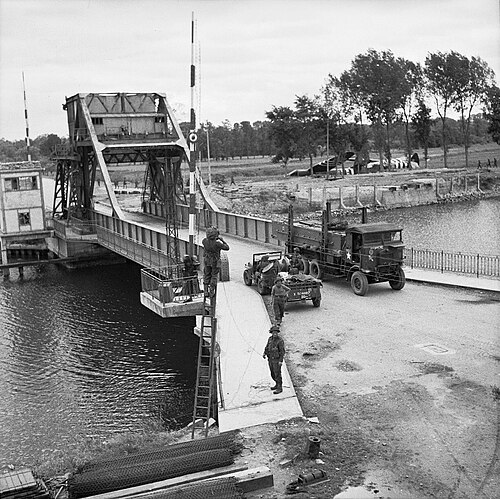
Pegasus Bridge is a lifting road bridge over the Caen Canal at Bénouville, just 9km north of Caen and around 14km from the Portsmouth to Caen ferry terminal at Ouistreham — making it one of the easiest D-Day sites to combine with a Sword Beach visit. Its Pegasus Bridge location, on the direct route between the ferry port and Caen, means most visitors pass within a few minutes of it without realising quite what happened here in the opening minutes of 6 June 1944.
Pegasus Bridge WW2 history begins just after midnight on D-Day, more than six hours before the first troops waded ashore on the beaches. A force of 181 British glider-borne infantry, flown in total silence and landing within yards of their target, captured this bridge — then known as Bénouville Bridge — in a swift, near-flawless assault that is still studied at military academies today. It was, by common agreement among historians, the first Allied action of the entire Normandy invasion.
This complete guide to Pegasus Bridge France covers everything you need to plan your 2026 visit: the full story of the glider assault, who took part and what happened to them, the origin of the name “Pegasus,” and a practical guide to visiting today — including the original bridge itself, the Café Gondrée next door, and the Pegasus Bridge Museum a short walk away.
Last updated: July 2026 | Facts verified from the Imperial War Museum, the official Mémorial Pégasus museum, Wikipedia’s primary-sourced military history entries and published accounts including Major John Howard’s own papers.