Juno Beach: The Complete Canadian D-Day Visitor Guide for 2026

Juno Beach is the Canadian sector of the Normandy D-Day landings — a 10km stretch of coast between the British beaches of Gold to the west and Sword to the east, centred on the small fishing port of Courseulles-sur-Mer. At H-Hour on the morning of 6 June 1944, the Canadian 3rd Infantry Division stormed ashore here, and by nightfall had driven further inland than any other Allied force landed that day, anywhere on the Normandy coast. From the Portsmouth to Caen ferry terminal at Ouistreham, Juno Beach is around 18km west along the coast road — close enough for an easy half-day trip, and the natural centrepiece of any visit to Normandy that wants to tell the Canadian side of the D-Day story.

D-Day at Juno Beach was, proportionally, the second-costliest of the five landings after Omaha — the Canadians faced some of the most heavily defended ground on the entire invasion front, with German strongpoints built directly into the seafront houses of Courseulles, Bernières-sur-Mer and Saint-Aubin-sur-Mer. Yet by the end of the day, the 3rd Canadian Infantry Division had broken through, linked up with the British at Gold Beach, and pushed further into France than the British, American or any other Allied division managed on 6 June 1944. It remains one of the most remarkable, and least well-known outside Canada, achievements of the entire invasion.

This complete guide to Juno Beach covers everything you need to plan your 2026 visit: the full story of what happened on D-Day at Juno Beach, which Canadian regiments landed and where, the casualty figures and what they mean, and a thorough guide to every significant site to visit today — from the Juno Beach Centre museum in Courseulles-sur-Mer to Canada House at Bernières-sur-Mer, the Croix de Lorraine, and the Bény-sur-Mer Canadian War Cemetery.

Last updated: July 2026 | All facts verified from the Juno Beach Centre, Commonwealth War Graves Commission, Library and Archives Canada, Britannica and primary sources. Admission prices verified from official museum sources.

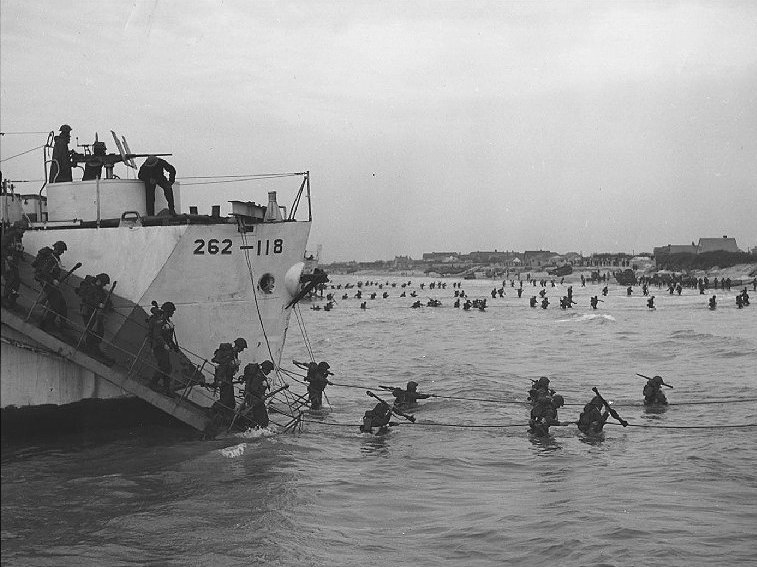
Juno Beach Normandy Day Trip, Canadian Soldiers disembark, 1944

Canadian troops disembarking at Juno Beach, D-Day, 6 June 1944. Credit: Canadian Forces Joint Imagery Centre / Library and Archives Canada, public domain, via Wikimedia Commons

Juno Beach — Key Facts for 2026

18km from Caen · Between Gold & Sword Beaches · H-Hour 07:45, 6 June 1944 — the latest of any D-Day beach · Canadian 3rd Infantry Division · ~14,000 Canadians landed · ~1,200 Canadian & British casualties

Check Ferry Prices & Book Portsmouth to Caen →

🇨🇦 Juno Beach at a Glance

18km
From Caen and from the Ouistreham ferry port — approximately 20-25 minutes by car
FREE
Beach, Bény-sur-Mer cemetery, Croix de Lorraine & Canada House
07:45
H-Hour, 6 June 1944 — delayed by rough seas and an offshore reef
14,000
Canadian troops landed on Juno Beach by the end of 6 June 1944
  • Juno Beach Centre, Courseulles-sur-Mer — the only Canadian museum on the D-Day beaches, telling the story of Canada’s civilian and military war effort. €9 adults, closed in January
  • Canada House, Bernières-sur-Mer — the first house liberated in Operation Overlord, taken by the Queen’s Own Rifles of Canada within 20 minutes of landing. Privately owned, often open to visitors
  • Croix de Lorraine, Graye-sur-Mer — an 18-metre steel cross marking where General de Gaulle returned to French soil on 14 June 1944. Free, always accessible
  • Bény-sur-Mer Canadian War Cemetery, Reviers — 2,049 graves, mostly men of the 3rd Canadian Division. Free, open daily, one of Normandy’s most moving CWGC sites
  • Juno Park & the beach itself — free, open access, with preserved German bunkers and Atlantic Wall remains right beside the Juno Beach Centre
  • Dog friendly, with seasonal rules. Dogs on leads are welcome on Juno Beach year-round, with restricted hours around the busiest stretches in summer (see FAQs below)
  • ⚠️Car recommended. A Nomad bus runs from Caen to Courseulles-sur-Mer, but a car makes it far easier to combine the Juno Beach Centre with Canada House, the Croix de Lorraine and Bény-sur-Mer cemetery in one visit

What Happened on D-Day at Juno Beach

Juno Beach was the responsibility of the Canadian 3rd Infantry Division under Major-General Rodney Keller, landing as part of the British Second Army under Lieutenant General Miles Dempsey. Of all five D-Day beaches, Juno had the latest H-Hour and, alongside Omaha, some of the fiercest resistance the Allies encountered on 6 June 1944.

07:45: A Delayed and Dangerous Landing

Juno Beach was fronted by offshore reefs and shoals that forced planners to delay H-Hour until the tide had risen enough for landing craft to clear them safely — officially set for 07:45, the latest H-Hour of any D-Day beach. Rough seas on the morning of 6 June pushed the first wave back further still: assault craft carrying the 7th and 8th Canadian Infantry Brigades did not actually touch down until around 07:49–07:55, by which time the rising tide had submerged many of the German beach obstacles the Allies had hoped to see and avoid. Ninety of the 306 landing craft used at Juno were destroyed or damaged, mostly on mined obstacles hidden beneath the water.

The delay had a second consequence: the pre-landing naval and air bombardment had already lifted by the time the Canadians hit the sand, giving the German 716th Infantry Division’s 736th Regiment — dug into concrete strongpoints built directly into the seafront houses of Courseulles, Bernières and Saint-Aubin — a clear field of fire on troops crossing open beach with no cover. The first minutes of the Juno Beach landing were, as a result, among the bloodiest of any sector on D-Day.

Mike and Nan Sectors: Courseulles, Bernières and Saint-Aubin

The 7th Canadian Infantry Brigade landed on Mike sector opposite Courseulles-sur-Mer, spearheaded by the Royal Winnipeg Rifles and Regina Rifle Regiment. The 8th Canadian Infantry Brigade landed on Nan sector to the east, opposite Bernières (Nan White) and Saint-Aubin (Nan Red), led by the Queen’s Own Rifles of Canada and the North Shore (New Brunswick) Regiment. DD (Duplex Drive) amphibious Sherman tanks of the 1st Hussars and Fort Garry Horse came ashore alongside the infantry — in places arriving late or after the first waves, which meant Canadian infantry had to storm several strongpoints without armoured support.

Losses in the opening minutes were severe. The Queen’s Own Rifles suffered roughly 50% casualties in some companies storming the sea wall at Bernières; the North Shore Regiment lost over a third of its strength taking Saint-Aubin, where a single 50mm anti-tank gun in a reinforced casemate (Widerstandsnest 27) held up the advance for hours. By around 11:00–11:12, combined infantry, engineer and armoured assaults had cleared the beach exits at Courseulles and Bernières; Saint-Aubin’s strongpoint fell by midday. Le Régiment de la Chaudière — a French-speaking regiment from Quebec — followed the assault troops inland, and locals were reportedly astonished to be liberated by soldiers who spoke French with an accent so close to their own that they could barely believe they were talking to Canadians.

🏆 Furthest Inland of Any Allied Force

Despite the heaviest German resistance of any beach except Omaha, and despite landing last of the five Allied divisions due to the tidal delay, the 3rd Canadian Infantry Division ended D-Day further into France than any other Allied unit — British, American or Canadian. By nightfall, forward elements had crossed the Caen–Bayeux road, roughly 9-10km inland, though the D-Day objective of Carpiquet airfield west of Caen remained 5km short. British historian John Keegan later wrote that Canadian troops that evening “stood deeper into France than those of any other division.”

🏠 Canada House: Liberated in 20 Minutes

Within 20 minutes of the Queen’s Own Rifles of Canada hitting Nan White sector at Bernières, they had cleared German troops from a large timber-framed villa overlooking the beach — very possibly the first house liberated anywhere during Operation Overlord. More than 100 men of the Queen’s Own were killed or wounded in the immediate vicinity of the house during those first minutes. It still stands today, known as Canada House or La Maison des Canadiens, and remains privately owned by the family who has welcomed Canadian veterans and their descendants for decades.

🇬🇧 The British at Juno: 48 Commando

Juno Beach is remembered as the Canadian beach, but British troops fought here too. No. 48 (Royal Marine) Commando landed on the eastern flank at Saint-Aubin, tasked with fighting east to capture Langrune-sur-Mer and link up with commandos advancing from Sword Beach — a costly, drawn-out action that took two days. British Army and Royal Navy personnel accounted for around 243 of the roughly 1,200 total Allied casualties suffered in the Juno sector on D-Day.

Who Landed on Juno Beach? The Regiments

The assault on Juno Beach was carried out almost entirely by the Canadian 3rd Infantry Division, reinforced by the 2nd Canadian Armoured Brigade, under overall command of the British I Corps (Lieutenant General John Crocker) within the British Second Army. Juno was divided into three assault sectors: Love in the west (from La Rivière to Hameau de Vaux, at the boundary with Gold Beach), Mike at Courseulles-sur-Mer, and Nan running east to Saint-Aubin — though it was Mike and Nan, covering the built-up seafronts, that saw the heaviest fighting and where the assault troops actually landed.

🇨🇦 3rd Canadian Infantry Division — Major-General Rodney Keller

7th Canadian Infantry Brigade (Mike sector — Courseulles):

  • Royal Winnipeg Rifles
  • Regina Rifle Regiment
  • 1st Battalion, Canadian Scottish Regiment (reserve)

8th Canadian Infantry Brigade (Nan sector — Bernières & Saint-Aubin):

  • Queen’s Own Rifles of Canada — Nan White, Bernières
  • North Shore (New Brunswick) Regiment — Nan Red, Saint-Aubin
  • Le Régiment de la Chaudière — French-speaking reserve, followed inland

9th Canadian Infantry Brigade (reserve, landed later D-Day):

  • Highland Light Infantry of Canada
  • Stormont, Dundas and Glengarry Highlanders
  • North Nova Scotia Highlanders

Armoured support (2nd Canadian Armoured Brigade): 1st Hussars (DD tanks, Mike sector) | Fort Garry Horse (DD tanks, Nan sector) | Sherbrooke Fusiliers (follow-up)

🎖️ 48 (Royal Marine) Commando — The British at Juno

Attached to the 3rd Canadian Division to cover the gap on the eastern flank toward Sword Beach. Landed at Saint-Aubin under heavy fire — the Commando’s landing craft took some of the worst losses of any unit at Juno — and fought a costly two-day battle to capture Langrune-sur-Mer before linking with commandos advancing from Sword.

Also present in support: the Royal Canadian Navy, which crewed many of the landing craft and provided fire support from ships including HMCS Algonquin and HMCS Sioux, and the Royal Canadian Air Force, which flew bombing and fighter cover missions on D-Day.

The German Defenders on Juno Beach

Juno was defended by the 736th Infantry Regiment of the German 716th Infantry Division, an understrength static coastal unit that also included the 441st Ost (East) Battalion — conscripted Eastern European troops and former Soviet prisoners of war. Twenty-nine companies, roughly 500 machine guns and around 90 guns of various calibres were sited along the Juno sector, with strongpoints built directly into seafront houses and concrete casemates covering the beach exits at Courseulles, Bernières and Saint-Aubin. In the days after D-Day, elements of the 21st Panzer Division and, from 7 June, the fanatical 12th SS Panzer Division “Hitlerjugend” launched repeated counterattacks against the Canadian bridgehead, in some of the bitterest fighting of the entire Normandy campaign.

What to See at Juno Beach Today

Juno Beach today combines a first-rate museum with an unusually dense cluster of authentic, moving sites — all within a few kilometres of each other around Courseulles-sur-Mer. These are the key places to visit, in order of priority.

🍁 The Juno Beach Centre — France’s Only Canadian D-Day Museum

The Juno Beach Centre France (officially Centre Juno Beach, Courseulles-sur-Mer) is the only Canadian museum on any of the D-Day landing beaches, and the single essential stop for understanding Canada’s role in the Second World War. Opened on 6 June 2003 through a grassroots fundraising campaign led by Canadian D-Day veterans, the Juno Beach Centre Museum sits directly on the site of the German strongpoint the Canadians fought through on D-Day morning, on Juno Park in Courseulles-sur-Mer. It covers Canada’s civilian and military contribution across the entire war — army, navy and air force — and honours the 45,000 Canadians who lost their lives during the Second World War, including roughly 5,500 during the Battle of Normandy and 381 on D-Day itself. Young Canadian guides lead the “Explore Juno” family tour (around 1.5 hours) and, from April to October, a 45-minute guided walk out onto the beach and the surviving Atlantic Wall bunkers of Juno Park.

Admission 2026: Juno Beach Centre Museum only: €9 adults | €7 reduced | €6 “low-carbon” rate (for visitors arriving by train, bus or bike) | Museum + bunker tour: €13.50 adults | €11.50 reduced | €10 low-carbon | Family ticket (2 adults + up to 3 children over 8): €27 (museum) or €42 (museum + bunkers) | Free under 8. Hours vary seasonally — 9:30am–7pm May to August, 9:30am–6pm March/April/September/October, 10am–5pm February/November/December, and the museum is closed throughout January and on 25 December (ticket sales end 45 minutes before closing). Address: Centre Juno Beach, Voie des Français Libres, 14470 Courseulles-sur-Mer. Check junobeach.org for current times before you travel.

🏠 Canada House, Bernières-sur-Mer

Also known as La Maison des Canadiens, this large half-timbered villa on the seafront at Bernières-sur-Mer — 2.3km east of the Juno Beach Centre — is one of the most photographed landmarks of D-Day, visible in the background of the famous images of Canadian troops wading ashore at Nan White sector. Liberated within 20 minutes of the landing by the Queen’s Own Rifles of Canada, it survived the war intact and is now cared for by the Hoffer family, who have spent decades welcoming Canadian veterans and their descendants inside, where the walls are covered in flags, regimental plaques and wartime memorabilia donated by returning soldiers over the years.

Visiting: Canada House is privately owned but generally open to respectful visitors, particularly in summer — there is no fixed admission charge, though donations are welcomed. Three plaques on the outside wall commemorate the Queen’s Own Rifles of Canada, the Fort Garry Horse and Le Régiment de la Chaudière. Free to view from the outside at any time.

🎖️ The Juno Beach Area Memorials

Juno Park and the seafront around the Juno Beach Centre hold an unusually dense cluster of smaller memorials, most within a few minutes’ walk of each other — easy to combine with the museum visit. The Royal Canadian Navy Memorial, dedicated in 2009, honours the sailors who died serving with the RCN during the Second World War and Operation Overlord. The 4th Light Anti-Aircraft Regiment Memorial preserves a 40mm Bofors anti-aircraft gun of the type that landed at Courseulles-sur-Mer on the afternoon of D-Day. The Memorial to Canadian Gunners features a 25-pounder Mark II field gun, the standard Canadian and British artillery piece of the campaign. The Juno Beach Signal Monuments — a matching pair with a sister monument on Omaha Beach — mark the sector in the shape of a ship’s prow set into a V for victory. A little further along, the Memorial to the Canadian Infantry at Graye-sur-Mer honours the Royal Winnipeg Rifles and Canadian Scottish Regiment who landed on the Mike Green and Mike Red sub-sectors, and the Monument to Polish Soldiers commemorates the 16,000 men and 400 tanks of the 1st Polish Armoured Division, who landed near Graye-sur-Mer and Courseulles at the end of July 1944 on their way to help close the Falaise Pocket.

Also on the beach at Bernières-sur-Mer stands the Inukshuk Memorial, honouring the Canadian First Nations soldiers who fought and died on D-Day — a stone figure in the Inuit tradition, and one of the few memorials anywhere in Normandy dedicated specifically to Indigenous Canadian servicemen. All of these memorials are free, outdoors and accessible at any time.

✝️ Croix de Lorraine, Graye-sur-Mer

An imposing 18-metre steel Cross of Lorraine — emblem of the Free French Forces — stands on the boundary between Courseulles and Graye-sur-Mer, marking approximately where General Charles de Gaulle returned to French soil on 14 June 1944, a week after D-Day, before travelling on to give his famous speech in newly liberated Bayeux. Nearby sits a restored Churchill AVRE “Petard” tank, recovered from a 4-metre hole in the sand where it lay buried for 32 years after being knocked out on D-Day. Free, open access, a 5-minute walk from the Juno Beach Centre.

🕊️ Bény-sur-Mer Canadian War Cemetery, Reviers

Overlooking the fields the 3rd Canadian Division fought across after D-Day, Bény-sur-Mer contains 2,049 graves — mainly men of the Canadian 3rd Division, alongside 15 airmen, three British soldiers and one French resistance fighter. Many died on D-Day itself; many more fell in the ferocious fighting against the 12th SS Panzer Division in the following weeks. Nine sets of brothers are buried here. Free entry, open every day, roughly 4km south of Courseulles-sur-Mer, signposted from the D35.

🏰 Juno Park & the Atlantic Wall Bunkers

Immediately around the Juno Beach Centre, Juno Park preserves original German bunkers and gun positions from the Atlantic Wall strongpoint the Canadians overran on D-Day morning. On the harbourside at Courseulles, the WN29 casemate and a preserved Sherman DD tank of the 6th Canadian Armoured Regiment mark the Mike sector landing point. A short walk east at Saint-Aubin, the WN27 casemate that housed the 50mm anti-tank gun which held up the North Shore Regiment for hours on D-Day still stands on the seafront. Free, open access, best combined with the guided bunker tour from the Juno Beach Centre (April–October, 45 minutes, steps directly inside the original German command post and observation bunker).

🏖️ Juno Beach — The Beach Itself

The beach today is a wide, gently sloping stretch of sand running from Saint-Aubin-sur-Mer in the east through Bernières and Courseulles to Graye-sur-Mer in the west — busy with families, sailing schools and dog walkers in summer, and quietly atmospheric out of season. Dogs on leads are welcome year-round, with restricted hours at the busiest central sections during the summer months (see FAQs below). Free, open access at all times.

Getting to Juno Beach from Caen

Juno Beach sits almost exactly midway between the ferry port at Ouistreham and Gold Beach at Arromanches, making it an easy addition to a Côte de Nacre coastal drive.

🚗 From Caen or the Ferry Port — 18km, ~20-25 Minutes

By car from Caen: Take the D79/D35 north-west toward Courseulles-sur-Mer — approximately 18km, 20-25 minutes, toll-free. Free parking is available beside the Juno Beach Centre and along the Courseulles seafront.

From the ferry port at Ouistreham: Follow the D514/D79 coast road west through the Sword Beach sector — approximately 18km, 20 minutes — passing the Colleville-Montgomery memorials and Hermanville War Cemetery on the way. This route can be continued a further 17km west to Gold Beach at Arromanches, covering all three British and Canadian D-Day beaches in a single scenic drive.

🚌 By Public Transport

Nomad bus line 101 runs from Caen to Courseulles-sur-Mer; line 121 runs from Bayeux. Both stop at “Chant des oiseaux”, roughly 650m (8-minute walk) from the Juno Beach Centre. There is no train station in Courseulles-sur-Mer — the nearest is Caen. Check nomad-normandie.fr for current timetables.

💡 Normandy Discovery Pass: For visitors relying on public transport, this €20 pass gives two people unlimited travel for two days on all Nomad trains and coaches within Normandy — useful if you’re combining Juno Beach with Caen, Bayeux or other D-Day sites without a car.

The Côte de Nacre Coastal Drive: Sword to Gold via Juno

The D514/D79 coast road linking Ouistreham to Arromanches runs straight through Juno Beach, making it simple to visit all three British and Canadian D-Day beaches in a single day: Sword Beach at Ouistreham (18km east of Juno), Juno Beach at Courseulles-sur-Mer, and Gold Beach at Arromanches (17km west of Juno). The full drive from Ouistreham to Arromanches takes around an hour without stops, and passes memorials, war cemeteries and beach access points along virtually its entire length. All roads are toll-free.

Sample Day: Juno Beach from Caen

Juno Beach’s sites are unusually concentrated, making it easy to see everything in half a day — or to build a full day around the Canadian D-Day story.

The Juno Beach Half-Day — Museum, Canada House & the Croix de Lorraine

Perfect for: A focused half-day from Caen or the ferry port covering the essential Juno Beach sites.

  • 09:30: Drive to Courseulles-sur-Mer from Caen or Ouistreham (~20 min)
  • 10:00: Juno Beach Centre — allow 1.5 hours for the museum (€9)
  • 11:30: Walk out to Juno Park and the beach itself — free
  • 12:00: Drive to the Croix de Lorraine at Graye-sur-Mer (5 min) — free, allow 20 minutes
  • 12:30: Lunch in Courseulles-sur-Mer — several seafront restaurants; the town is known for its oysters
  • 14:00: Drive to Bernières-sur-Mer (10 min) — Canada House, free to visit
  • 15:00: Return to Caen or continue west to Gold Beach at Arromanches (17km, 20 min)

Full Canadian D-Day Day — Mémorial de Caen + Juno Beach + Bény-sur-Mer + Canada House

Perfect for: Visitors with a specific interest in the Canadian D-Day story, or family connections to the 3rd Canadian Division.

  • 09:00: Mémorial de Caen for essential context (allow 2.5 hrs, from ~€20.80)
  • 11:45: Drive to Bény-sur-Mer Canadian War Cemetery, Reviers (~20 min) — free, allow 30-45 minutes
  • 12:45: Drive to Courseulles-sur-Mer (10 min) — lunch on the seafront
  • 14:00: Juno Beach Centre (1.5 hrs, €9), then the guided bunker & beach tour if running (April–October)
  • 16:00: Croix de Lorraine at Graye-sur-Mer (20 min, free)
  • 16:30: Canada House at Bernières-sur-Mer (30 min, free)
  • 17:15: Return to Caen (~20 min)

Top Tips for Visiting Juno Beach

  • Check the Juno Beach Centre’s dates before you travel: The museum is closed throughout January and on 25 December, and opening hours change through the rest of the year (shortest in winter, 9:30am-7pm in peak summer). Junobeach.org has current times, verified directly against the official 2026 price and hours list.
  • Book the guided bunker tour if you want to walk Juno Park properly: The 45-minute guided walk to the beach and Atlantic Wall bunkers runs April to October and is led by young Canadian guides — well worth it for context you won’t get from the exhibits alone.
  • Travelling with a dog? Juno Beach is broadly dog-friendly year-round on a lead, but from 1 June to 30 September dogs are only permitted on the central beach at low tide, before 11:30am and after 6:30pm — outside those hours and dates, the whole beach is open to leashed dogs. Bring your own waste bags, though free ones are usually available at the tourist office.
  • Canada House is a private home — visit respectfully: The Hoffer family has welcomed visitors for decades out of genuine generosity, not as a commercial attraction. It’s usually open to callers, especially in summer, but there’s no guaranteed opening schedule — a donation towards its upkeep is appreciated if you’re shown around.
  • Combine Juno with both neighbouring beaches: Juno sits almost exactly midway between Sword (at the ferry port) and Gold (at Arromanches), so it’s easy to build a single day covering all three British and Canadian sectors along the D514/D79 coast road.
  • Don’t skip Bény-sur-Mer: It’s a few minutes’ detour inland from Courseulles and, unlike some of the larger cemeteries further along the coast, rarely crowded — a genuinely quiet, reflective stop.
  • Pair it with the 1944 Radar Museum: A short drive south-east at Douvres-la-Délivrande, this preserved German radar station tells a different side of the Atlantic Wall story — five original radar systems and refurbished bunkers, a natural add-on if you want more than the beach and memorials alone.
  • The casualty figures matter: Juno Beach was, proportionally, the second-costliest D-Day landing after Omaha — around 1,200 Canadian and British casualties on 6 June alone. Yet by nightfall the Canadians had pushed further inland than any other Allied division. Both facts are true, and the Juno Beach Centre tells that full story better than anywhere else in Normandy.

Juno Beach: Frequently Asked Questions

Where is Juno Beach in Normandy?

Juno Beach is in Normandy, France, in the Calvados department along the Côte de Nacre, roughly 18km northwest of Caen. It stretches around 10km along the coast, centred on the town of Courseulles-sur-Mer and taking in Bernières-sur-Mer, Saint-Aubin-sur-Mer and Graye-sur-Mer. Juno was the central of the three British and Canadian D-Day beaches — with Gold Beach around 17km to the west and Sword Beach around 18km to the east at Ouistreham, where the Portsmouth to Caen ferry now arrives.

What happened on D-Day at Juno Beach?

At H-Hour, 07:45 on 6 June 1944 — delayed by rough seas and offshore reefs, the latest H-Hour of any D-Day beach — the Canadian 3rd Infantry Division landed at Juno Beach. The Royal Winnipeg Rifles and Regina Rifle Regiment led the assault on Mike sector at Courseulles, while the Queen’s Own Rifles of Canada and North Shore Regiment landed on Nan sector at Bernières and Saint-Aubin. German strongpoints built into seafront houses caused heavy losses in the opening minutes, but by around midday the beach exits and coastal towns were cleared. By nightfall, the Canadians had linked with the British at Gold Beach and pushed further inland than any other Allied force on D-Day, though heavy German armoured counterattacks over the following days meant the wider battle for the beachhead continued well past 6 June.

Did British troops land on Juno Beach?

Yes. While Juno is remembered as the Canadian beach, No. 48 (Royal Marine) Commando — a British unit — landed on the eastern flank at Saint-Aubin-sur-Mer, tasked with fighting east to capture Langrune-sur-Mer and link up with commandos advancing from Sword Beach. The Royal Navy also crewed many of the landing craft and provided fire support offshore. Of the roughly 1,200 Allied casualties suffered in the Juno sector on D-Day, around 243 were British Army personnel.

How long did the Battle of Juno Beach last?

The assault on the beach itself was relatively short: the first Canadian troops landed around 07:45-07:55, the beach exits at Courseulles and Bernières were cleared by roughly 11:00-11:12, and the fortified strongpoint at Saint-Aubin fell by midday — meaning the fighting to actually secure the beach and coastal towns lasted around four to five hours. However, the wider Battle of Juno Beach, meaning the struggle to hold and expand the beachhead against determined German armoured counterattacks from the 21st Panzer and 12th SS Panzer Divisions, continued for several more days after 6 June, well into the second week of June 1944.

How many Canadians landed on Juno Beach?

Approximately 14,000 Canadian troops from the 3rd Canadian Infantry Division and 2nd Canadian Armoured Brigade landed on Juno Beach on D-Day, 6 June 1944, alongside around 1,000 more who arrived by parachute or glider with the 1st Canadian Parachute Battalion further east. Including British troops (chiefly No. 48 Royal Marine Commando) and supporting Royal Navy personnel, roughly 21,000-21,400 Allied troops in total landed on Juno Beach that day.

How many casualties were there on Juno Beach? How many soldiers died?

Canadian Army casualties in the Juno sector on D-Day totalled 340 killed, 574 wounded and 47 taken prisoner — 961 in all — according to the official figures compiled in C.P. Stacey’s The Victory Campaign and confirmed by the Juno Beach Centre. Adding the 19 Canadian paratroopers killed elsewhere on D-Day brings the commonly cited total to 359-381 Canadians killed on 6 June 1944 across all services. British Army casualties in the Juno sector added a further 243, bringing total Allied casualties at Juno on D-Day to approximately 1,200 — proportionally the second-highest of any D-Day beach after Omaha. The Queen’s Own Rifles of Canada suffered the heaviest single-regiment losses, with 143 casualties.

Is Juno Beach dog friendly?

Yes, with seasonal restrictions. Dogs on leads are welcome on Juno Beach at Courseulles-sur-Mer year-round outside the summer season. From 1 June to 30 September, dogs are only permitted on the central beach at low tide, before 11:30am and after 6:30pm; outside this period, leashed dogs can access the whole beach at any time. Owners must pick up after their dogs — free waste bags are usually available from the tourist office. Small dogs carried in your arms are welcome inside the Juno Beach Centre itself at any time, and larger dogs on a lead can join a reserved slot on the museum terrace outside these times; dogs are too large for the bunkers themselves, which are too narrow to allow them in. Note that the Juno Beach Centre does not permit dogs inside the museum at all between 1 and 8 June each year, owing to the volume of visitors around the D-Day anniversary — check junobeach.org before travelling if visiting with a dog around that week.

What is the Juno Beach Centre?

The Juno Beach Centre (Centre Juno Beach) in Courseulles-sur-Mer is the only Canadian museum on any of the five D-Day landing beaches in France. Opened on 6 June 2003 following a campaign led by Canadian veterans, the Juno Beach Centre Museum tells the story of Canada’s entire Second World War effort — army, navy and air force, at home and abroad — and honours the 45,000 Canadians who died during the war. It sits directly on Juno Park, the site of the German strongpoint the Canadians fought through on D-Day, and offers guided tours of the beach and surviving Atlantic Wall bunkers from April to October. Admission is €9 for adults in 2026.

Why was it called Juno Beach?

“Juno” was an operational codename chosen to conceal the real landing sites from German intelligence, part of the same naming system that gave the neighbouring beaches their names — Gold from “Goldfish” and Sword from “Swordfish”. Juno’s origin is less certain than its neighbours’: the most widely repeated explanation is that it was named after “Jellyfish”, shortened in the same pattern as Gold and Sword, though some historians suggest a more informal origin. Either way, like all five D-Day beach names, it was a purely functional security designation with no symbolic meaning attached at the time.
Continue Planning Your Normandy D-Day Visit

🏖️

All D-Day Beaches

Complete hub covering all five D-Day landing beaches — Utah, Omaha, Gold, Juno and Sword — with distances from Caen and our interactive map

D-Day Beaches Hub →

⚔️

Sword Beach

The British beach at the ferry port itself — 18km east of Juno, with Le Grand Bunker and the Free French commando story

Sword Beach →

Gold Beach

The British beach 17km west of Juno — the Mulberry Harbour remains at Arromanches and the only Victoria Cross of D-Day

Gold Beach →

🏛️

Mémorial de Caen

The world’s finest D-Day museum — visit before the beaches for essential context on what happened and why. In Caen itself, 18km from Juno

Mémorial de Caen →

Visit Juno Beach — Travel via Portsmouth to Caen

Brittany Ferries sails year-round from Portsmouth to Caen (Ouistreham). From the ferry terminal, Juno Beach is approximately 20 minutes by car — the Juno Beach Centre, Canada House and the Croix de Lorraine all within an easy morning’s drive.

Check Prices & Book Portsmouth to Caen →